Henry VI inherited the English throne as an infant in 1422 and was later crowned king of France, but his government lost most of the territories conquered by Henry V. Personally devout and interested in education, he suffered periods of mental incapacity that intensified factional struggles.

His marriage to Margaret of Anjou and the rival claim of Richard of York helped trigger the Wars of the Roses. Henry was deposed, briefly restored and killed in the Tower in 1471. Henry VI was born in Windsor Castle and died in Tower of London.
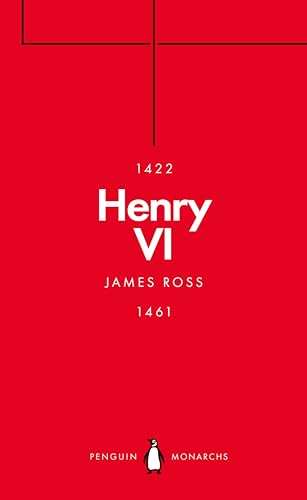
Derek Birks’ A Guide to the Wars of the Roses begins with Henry VI’s weak government and the factional rivalry that turned disputes over patronage and policy into dynastic war. Juliet Barker’s Conquest shows how the infant Henry inherited his father’s French kingdom and how regents struggled to preserve an enterprise already vulnerable to Valois recovery. Bertram Wolffe’s Henry VI argues that the king’s passivity and failures of judgement contributed materially to financial disorder, territorial loss and political breakdown rather than treating him only as a victim of stronger nobles. James Ross’ Henry VI (Penguin Monarchs) follows the same reign through mental collapse, deposition, restoration and death. A. W. Boardman’s St Albans 1455 reconstructs the first armed confrontation in which Henry’s unstable government became a battlefield struggle between Yorkist and royal forces.