As an Amazon Associate I earn from qualifying purchases. Affiliate disclosure.

Period

Georgian Era

1714–1830 CE

The Georgian Era begins with the Hanoverian Succession in 1714 and runs through the reigns of George I, George II, George III and George IV, ending in 1830. It was an age of parliamentary politics, aristocratic patronage, imperial rivalry, urban expansion and new forms of consumer culture. The country house, assembly room, theatre, newspaper and coffee house became important stages for power and reputation.

Britain grew wealthier and more globally connected, but that prosperity rested on deep inequalities at home and abroad. The era brought financial speculation, religious tension, criminal underworlds, anti-Catholic agitation, abolitionist campaigning and early industrial transformation. It created a society where status, credit, gender and birth could determine a person’s chances as sharply as law or violence.

Georgian settings suit the social precision of Jane Austen and Frances Burney, the romantic confidence of Georgette Heyer, and darker recent fiction such as Laura Shepherd-Robinson’s Blood & Sugar and Antonia Hodgson’s Thomas Hawkins novels. Stacey Halls’s The Foundling and Susan Stokes-Chapman’s Pandora also use Georgian London as a world of institutions, commerce and secrets. Series set here can move easily between drawing rooms, docks, courts, prisons, pleasure gardens and provincial estates.
Related people for Georgian Era

Allan Breck Stewartc. 1722–c. 1791 Anne Brontë1820–1849 Anne of Great Britain1665–1714 Arthur Wellesley, 1st Duke of Wellington1769–1852 Beau Brummell1778–1840 Branwell Brontë1817–1848 Caroline of Ansbach1683–1737 Catherine Blake1762–1831 Charles Edward Stuart1720–1788 Charles II of England1630–1685 Charles James Fox1749–1806 Charlotte Brontë1816–1855 Charlotte of Mecklenburg-Strelitz1744–1818 Colin Roy Campbell of Glenurec. 1708–1752 Emily Brontë1818–1848 Francis Dashwood, 11th Baron le Despencer1708–1781 George III1738–1820 George II of Great Britain1683–1760 George I of Great Britain1660–1727 George IV of the United Kingdom1762–1830 George Washington1732–1799 Giuseppe Garibaldi1807–1882 Henrietta Howard, Countess of Suffolkc. 1688–1767 Horatio Nelson1758–1805 Hyder Ali1720–1782 James Mor MacGregorc. 1695–1754 James Stewart of the Glenc. 1698–1752 Jane Austen1775–1817 John Fielding1721–1780 John Graham, 1st Viscount Dundee1648–1689 John Moore1761–1809 Lord George Gordon1751–1793 Louis XIV1638–1715 Louis XV of France1710–1774 Mary Darby Robinson1758–1800 Napoleon1769–1821 Otto von Bismarck1815–1898 Patrick Brontë1777–1861 Philip Astley1742–1814 Prince William, Duke of Cumberland1721–1765 Richard Brinsley Sheridan1751–1816 Robert Clive1725–1774 Rob Roy MacGregor1671–1734 Thomas Cochrane, 10th Earl of Dundonald1775–1860 Tipu Sultan1751–1799 Ulysses S. Grant1822–1885 Victoria1819–1901 Wilhelm II1859–1941 William Blake1757–1827 William Grant, Lord Prestongrange1701–1764 William Pitt the Younger1759–1806 William Wordsworth1770–1850

Series

Series about Georgian Era (1 series)

Rokesby Series in Order

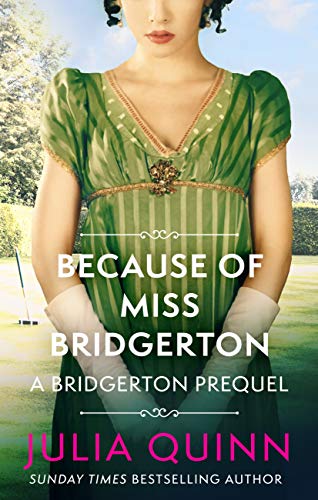
by Julia Quinn 4 books 4.5(58,814)

The Rokesby novels are prequels to the Bridgerton books, following an earlier generation of the neighbouring Bridgerton and Rokesby families from 1779 to 1791. Their country estates provide a stable family centre, but the stories reach into the American Revolutionary War, Atlantic travel, private intelligence work and medical…

Books

30 Best Novels About the Georgian Era

Non-Fiction

23 Best Non-Fiction Books About the Georgian Era

Histories, biographies and reference works are listed separately from the historical novels above.