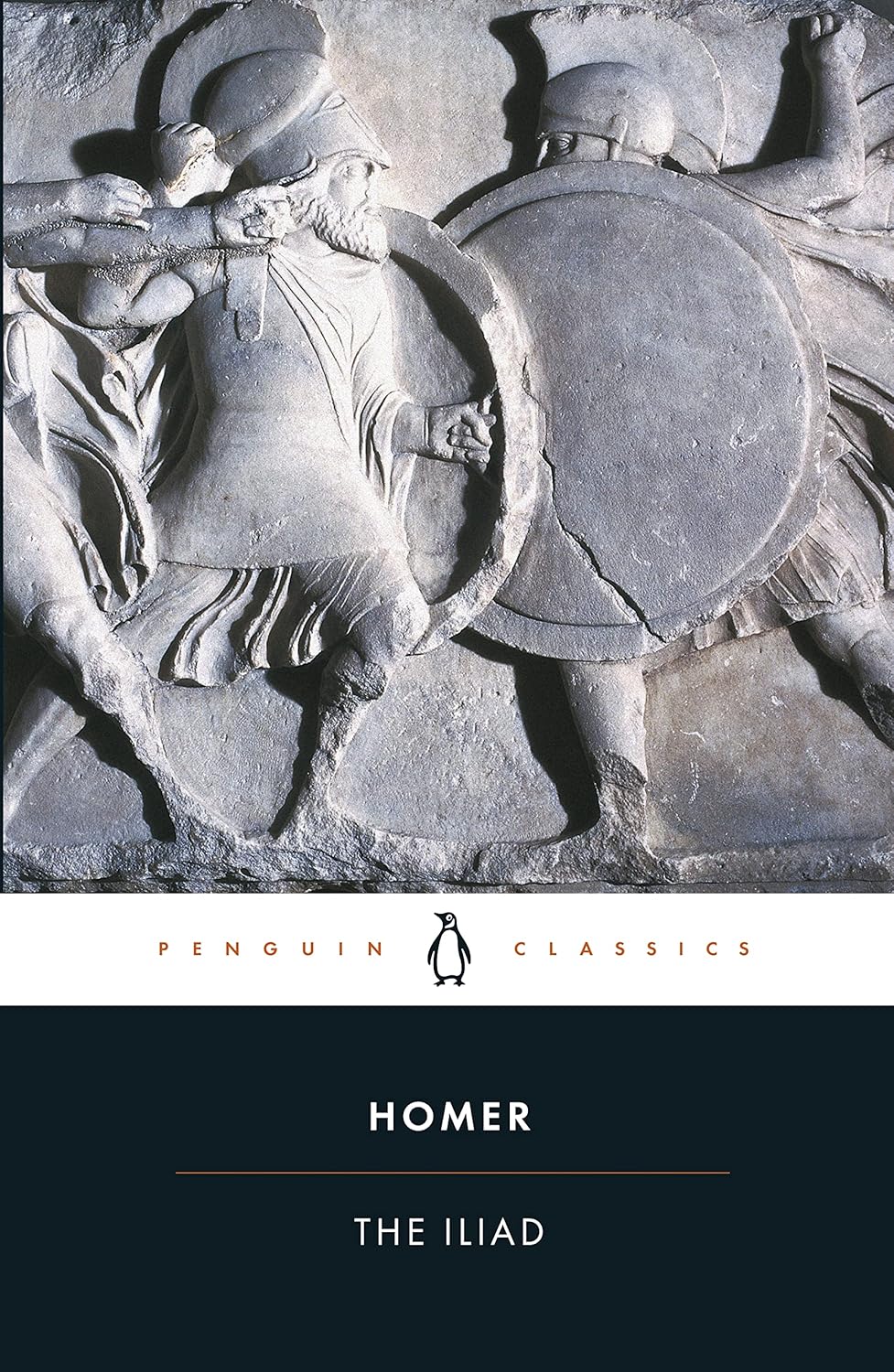
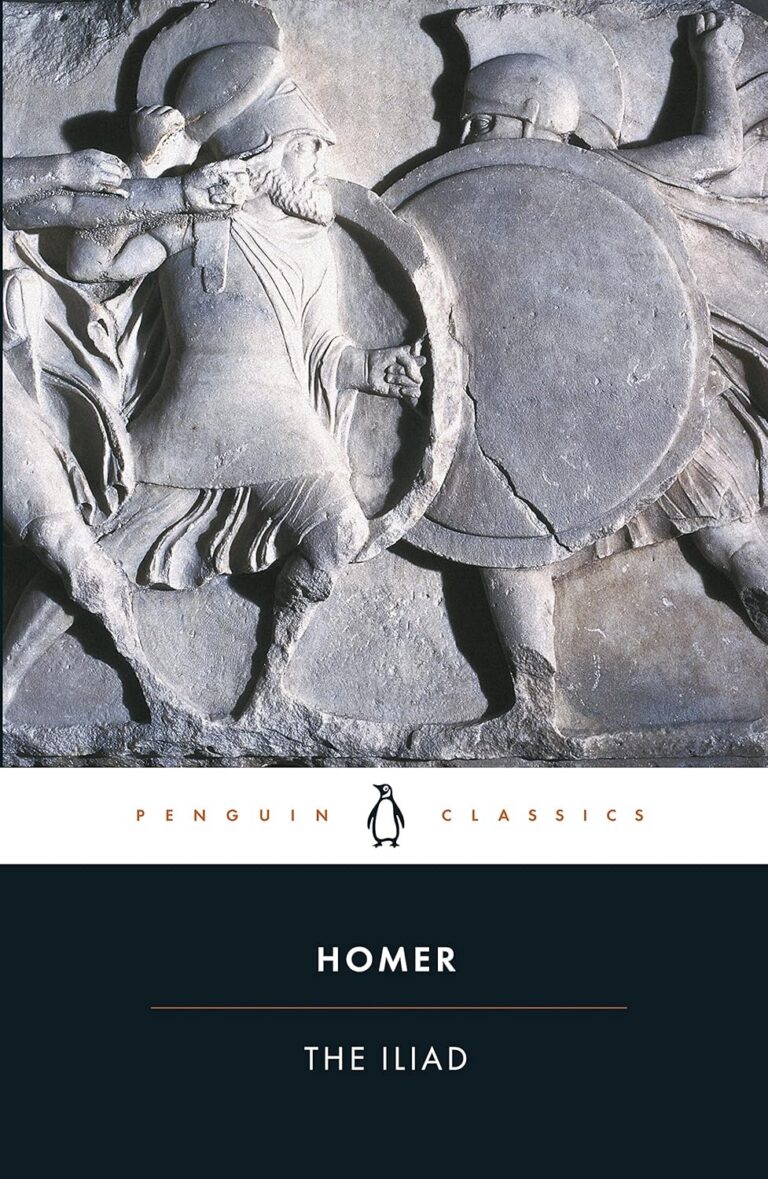
The Iliad is an ancient Greek epic traditionally attributed to Homer and set during the final year of the Trojan War. Rather than narrating the whole conflict, it concentrates on a brief period shaped by the anger of Achilles. After Agamemnon takes Briseis from him, Achilles withdraws from the Greek army and asks his divine mother, Thetis, to persuade Zeus to favour the Trojans. Without their greatest warrior, the Greeks are driven back towards their ships, while Hector leads the Trojan assault and appears close to breaking their resistance.
The crisis deepens when Achilles allows Patroclus to enter battle wearing his armour. Patroclus drives the Trojans away from the Greek camp but is killed by Hector, transforming Achilles’ wounded pride into overwhelming grief and a desire for revenge. Achilles returns to battle, kills Hector outside the walls of Troy and repeatedly drags his body behind his chariot. The poem does not end with Troy’s destruction or Achilles’ death, but with Priam entering the Greek camp to ransom Hector’s body. Achilles recognises the grief they share, restores the body and allows the Trojans time to conduct Hector’s funeral.
Through these events, The Iliad examines anger, honour, reputation, loyalty and mortality. Its warriors seek lasting glory because they know that their lives will be brief, yet the poem repeatedly reveals the suffering concealed by heroic achievement. Scenes of battle are balanced by intimate encounters between Hector and Andromache, Achilles and Patroclus, and Priam and Achilles. The gods intervene constantly, protecting favourites and redirecting events, but they cannot remove the certainty of death. By presenting both Greeks and Trojans with dignity and sympathy, the poem becomes not simply a celebration of warfare but a tragic exploration of what war does to individuals, families and entire communities.
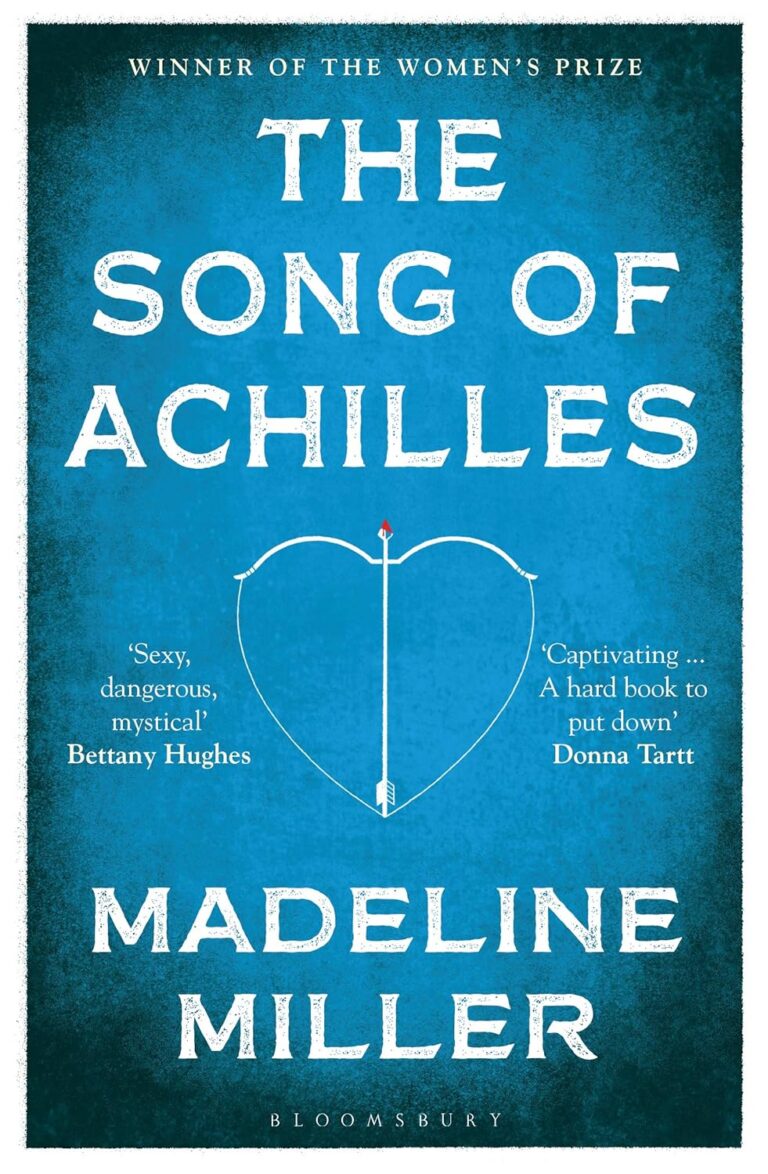
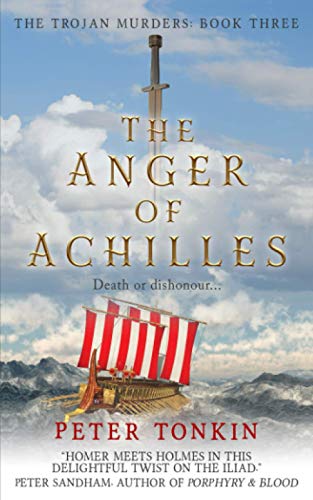
These tensions between glory and suffering have made the poem especially fertile ground for modern novelists, many of whom retell its events from perspectives that Homer leaves at the margins. Madeline Miller’s The Song of Achilles follows Patroclus from his childhood exile through his relationship with Achilles and their years at Troy. It recreates central episodes including Achilles’ quarrel with Agamemnon, Patroclus entering battle in Achilles’ armour, his death at Hector’s hands and Achilles’ return to avenge him. Pat Barker’s The Silence of the Girls approaches the same conflict through Briseis, the captive woman at the centre of the dispute between Achilles and Agamemnon, and examines the enslavement, labour and sexual violence experienced by women in the Greek camp.
Emily Hauser’s For the Most Beautiful similarly revisits the opening crisis through Briseis and Chryseis, expanding the stories of two women who are essential to the plot but given comparatively little opportunity to speak in Homer. Marion Zimmer Bradley’s The Firebrand tells the wider Trojan story through Cassandra, combining episodes from the epic with other traditions concerning the origins and destruction of Troy. David Gemmell’s Troy trilogy—Lord of the Silver Bow, Shield of Thunder and Fall of Kings—reimagines the war as a broad political and military struggle, enlarging the roles of Hector, Andromache, Odysseus and other figures while substantially reshaping the traditional narrative.
Other novels move beyond the precise period covered by Homer to explore the war’s effects on Troy’s women and survivors. Natalie Haynes’s A Thousand Ships brings together the experiences of women, girls and goddesses connected with the conflict, including Hecuba, Andromache, Cassandra, Briseis and Thetis. Barker’s The Women of Troy begins after the city has fallen, following Briseis and the captive Trojan women as the victorious Greeks wait to sail home. Together, these retellings demonstrate how The Iliad continues to generate new stories by reconsidering whose suffering is visible, whose testimony is heard and what heroic glory costs those excluded from the poem’s principal narrative.



 Virgil
1 book
Virgil
1 book
 Hesiod
1 book
Hesiod
1 book
 Apollonius of Rhodes
2 books
Apollonius of Rhodes
2 books
 Aeschylus
1 book
Aeschylus
1 book
 Euripides
5 books
Euripides
5 books