Douglas Haig, 1st Earl Haig was the commander-in-chief of the British Expeditionary Force for much of the First World War. He directed major offensives on the Somme and at Passchendaele and later oversaw the army during the Hundred Days victories of 1918.
Douglas Haig, 1st Earl Haig also held the offices or ranks of Viscount Dawick, Baron Haig, and member of the House of Lords. Douglas Haig, 1st Earl Haig was born in Charlotte Square and died in Princes Gate.
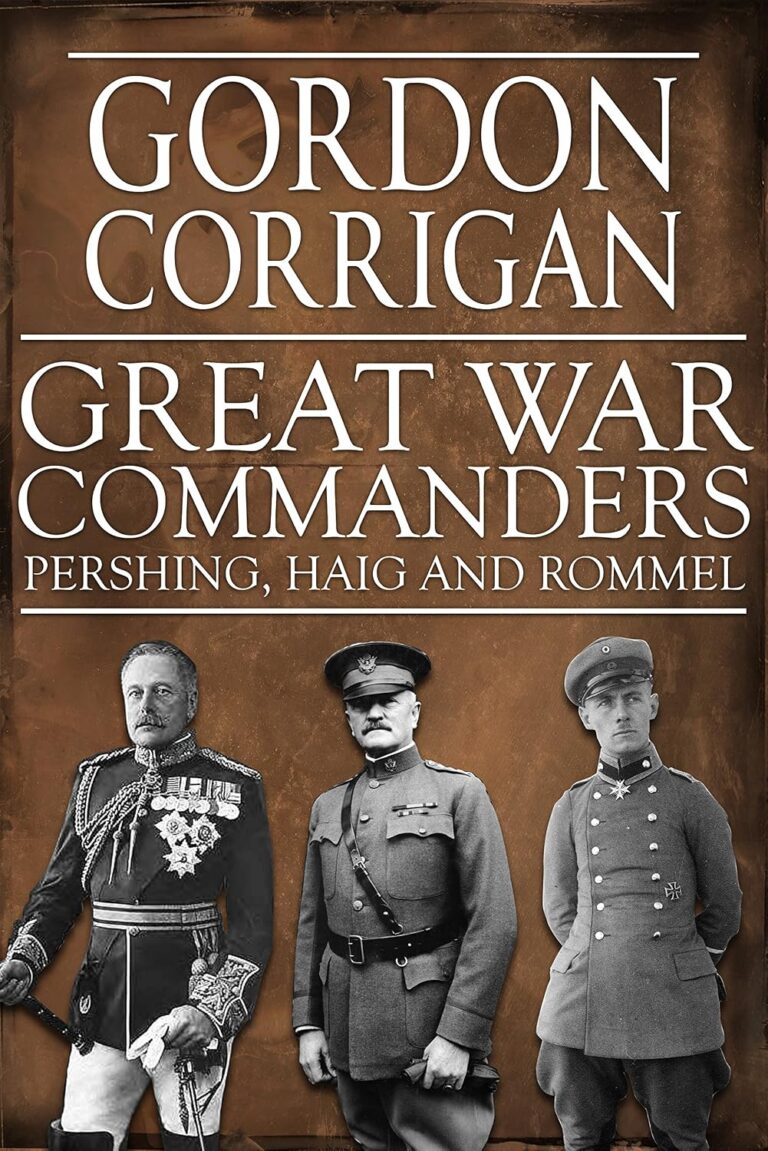
Gordon Corrigan’s Great War Commanders brings together Gordon Corrigan’s studies of three soldiers whose First World War experiences shaped very different military reputations. Douglas Haig commanded the British Expeditionary Force through the battles of attrition and the final campaigns of 1918; John J. Pershing built and led the American Expeditionary Forces; and the young Erwin Rommel fought as a junior German officer in France, Romania and Italy. Gordon Corrigan’s Loos 1915 examines shortages of artillery and ammunition, command arrangements, communications and the performance of inexperienced formations, while also tracing the battle’s role in the removal of Sir John French and the rise of Douglas Haig to command the British Expeditionary Force. Historical accounts that place Douglas Haig, 1st Earl Haig in context include Saul David’s 100 Days to Victory, Saul David’s 1915, Saul David’s 1916, Saul David’s 1917, and Gordon Corrigan’s Mud, Blood and Poppycock.