c. 82–46 BCE
Vercingetorix was an aristocrat of the Arverni who in 52 BCE became the leading commander of the largest coordinated Gallic revolt against Julius Caesar. He built support among several peoples of central and northern Gaul and attempted to counter Roman mobility through scorched-earth tactics, fortified strongholds and concentration of forces. His army defeated Caesar at Gergovia, a serious Roman reverse that demonstrated the danger posed by a coalition able to combine local resistance with broader strategic leadership.
The decisive campaign came at Alesia, where Vercingetorix and his army were trapped inside a hilltop stronghold. Caesar’s troops constructed extensive inner siege works and an outer defensive line against a massive Gallic relief force, defeating attacks from both directions. Vercingetorix surrendered after the relief effort failed, and organised Gallic resistance largely collapsed. He was kept prisoner for several years, displayed in Caesar’s triumph at Rome in 46 BCE and then executed. Later French nationalism transformed him into a powerful symbol of resistance and national origins.
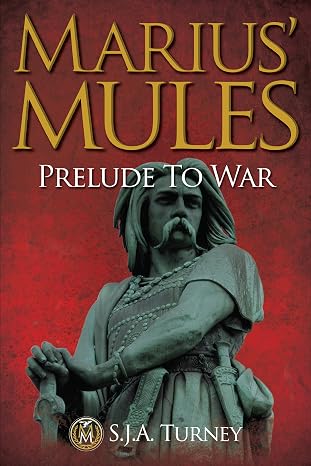
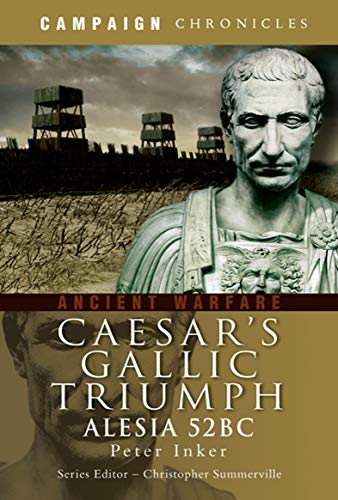
In Richard Woodman’s Caesar’s Gallic Triumph, in 52 B.C., Julius Caesar pulled off one of the great feats of Roman arms in what is now Burgundy, France. His heavily outnumbered army utterly defeated the combined forces of the Gallic tribes led by Vercingetorix and completed the Roman conquest of Gaul. In Richard Foreman’s Alesia, at Alesia in 52 BCE, Caesar’s army has enclosed Vercingetorix but is itself threatened by a vast Gallic relief force. Further fictional perspectives on Vercingetorix can be found in Colleen McCullough’s Caesar, Simon Turney’s Marius’ Mules VI, Simon Turney’s Marius’ Mules VII, Simon Turney’s Marius’ Mules: Prelude to War, and Richard Foreman’s Never Surrender.