Paris was a Trojan prince, the son of King Priam and Queen Hecuba, whose relationship with Helen provides the legendary cause of the Trojan War. Ancient tradition describes how he was asked to judge which of the goddesses Hera, Athena and Aphrodite was the most beautiful. Paris awarded the prize to Aphrodite after she promised him the love of Helen, wife of Menelaus of Sparta. His departure with Helen brought the Greek armies to Troy, making him a politically disastrous figure whose private desire exposed his family and city to a decade of war.
Paris’s judgement between Hera, Athena and Aphrodite becomes the mythical cause of the Trojan War when Aphrodite rewards him with the love of Helen. In the Iliad he is often contrasted with Hector, appearing as a capable archer but an unreliable warrior whose choices have brought disaster on Troy. Later traditions also make him responsible for Achilles’ death before Paris himself is killed by Philoctetes.
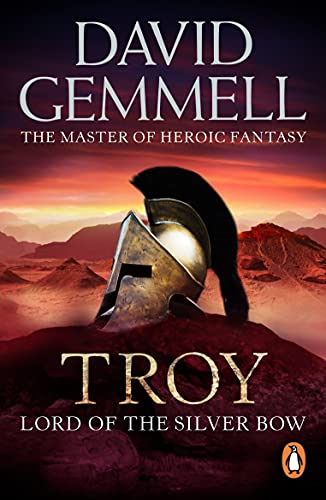
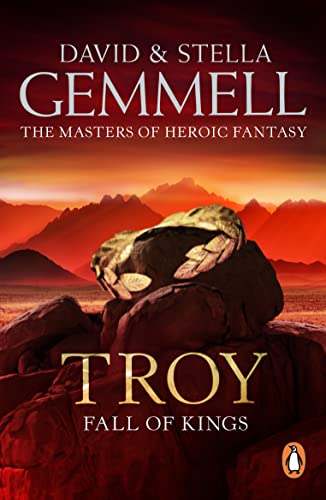
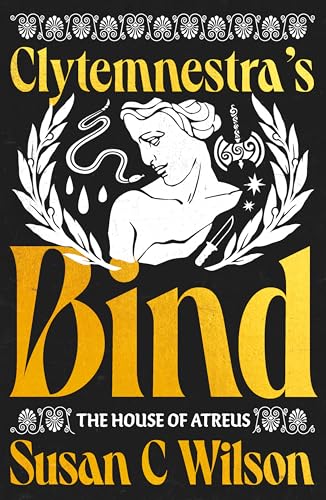
In Susan C Wilson’s Helen’s Judgement, when Paris arrives from Troy, she sees in him an escape from an unhappy marriage and leaves behind both Menelaus and her daughter Hermione. In Marion Zimmer Bradley’s The Firebrand, Cassandra, daughter of Priam and Hecuba, grows up in Troy with visions that reveal the destruction approaching her family and city. Trained between the worship of the Goddess and the temple of Apollo, she resists the roles expected of a royal daughter while Paris’s return with Helen gives Agamemnon the pretext for war. Bradley retells the Trojan War from Cassandra’s perspective, following the siege through the experiences of Trojan women, priestesses and captives rather than treating them as prizes in a heroic contest. Prophecy, sexual violence, religious conflict and the fall of Troy reshape the familiar epic into a story about whose testimony is believed and whose suffering is remembered. Further fictional perspectives on Paris can be found in Henry Treece’s The Windswept City, Susan C Wilson’s Clytemnestra’s Bind, Caroline Alexander’s The Iliad, David Gemmel’s Troy: Fall of Kings, and David Gemmel’s Troy: Lord of the Silver Bow.