Henry IV was born Henry of Bourbon, king of Navarre, and became the leading Protestant prince during the later French Wars of Religion. His 1572 marriage to Margaret of Valois was intended to ease confessional conflict, but the celebrations in Paris immediately preceded the St Bartholomew’s Day Massacre. Henry survived, spent years navigating captivity, conversion and renewed Protestant leadership, and became heir presumptive to the French crown as the Valois dynasty approached extinction.
Henry became king of France in 1589 but had to defeat Catholic League resistance before securing the kingdom. His conversion to Catholicism in 1593 helped make reconciliation possible, while the Edict of Nantes in 1598 granted Huguenots a limited framework of worship and political security. With ministers including the Duke of Sully, Henry restored royal finances and authority after decades of civil war. His plans for further European intervention ended when the Catholic zealot François Ravaillac assassinated him in Paris on 14 May 1610.
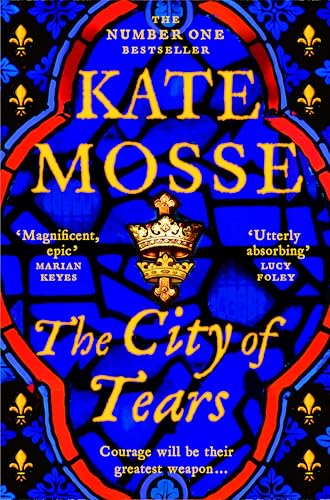
In Jean Plaidy’s Myself, My Enemy, the daughter of Henry IV of France, Princess Henrietta Maria, becomes a pawn in a political strategy to stabilize relations between two countries when her father marries her to Charles I of England. In G. A. Henty’s Saint Bartholomew's Eve, Historical figures including Catherine de' Medici, Charles IX of France, Gaspard II de Coligny, and Henry IV of France connect the fictional action directly to the documented events. Further fictional perspectives on Henry IV of France can be found in G. P. R. James’ Henry of Guise; or, the States of Blois, Kate Mosse’s The City of Tears, John Pilkington’s A Reluctant Traitor, and G. P. R. James’ One in a Thousand; or, the Days of Henri Quatre. For broader historical treatment of Henry IV of France, see David Hackett Fischer’s Champlain’s Dream.