Shaka was king of the Zulu kingdom in the early nineteenth century and a major figure in southern African history. His military and political changes helped build Zulu power, though later traditions about his reign mix history, memory and legend.
Shaka was born in Mthethwa Paramountcy and died in KwaDukuza. Shaka reorganised military service and expanded Zulu authority through warfare and incorporation of neighbouring communities; he was assassinated in 1828 by his half-brothers, including Dingane, who succeeded him.
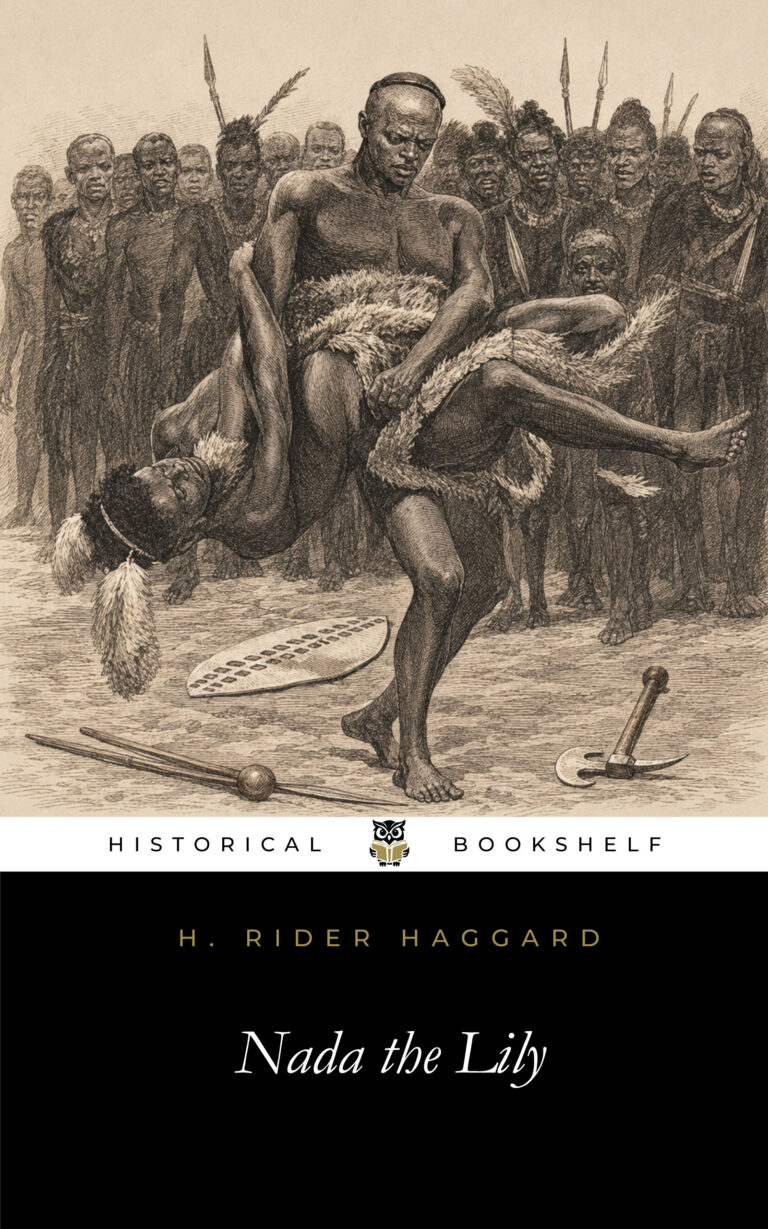
Allan Mallinson’s Company of Spears sends Matthew Hervey beyond the Cape frontier in 1827, where Shaka’s expanding Zulu kingdom and its military organisation force a European cavalry officer to confront a very different system of war and political authority. H. Rider Haggard’s Nada the Lily places Shaka at the centre of a tragic Zulu narrative told by Mopo, combining his conquests and court violence with the later rise of Dingane. Wilbur Smith and Tom Harper’s Warrior King shows settlers negotiating with Shaka during the expansion of his kingdom, while Mallinson’s Warrior brings Hervey to the royal kraal shortly before Shaka’s assassination and follows the succession crisis that follows. Vengeance begins after his death, showing how the warfare, displacement and political structures associated with Shaka continue to shape the Highveld long after the king himself is gone.