
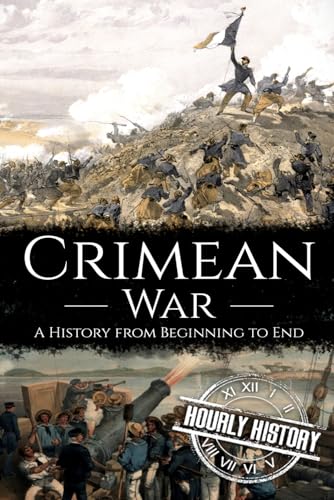
1. Crimean War
The Crimean War examines the conflict of 1853–1856 in which Russia faced the Ottoman Empire, Britain, France and Sardinia. It explains the diplomatic dispute over Ottoman territories and Christian holy sites and the wider European determination to contain Russian expansion. The account follows the naval war,…
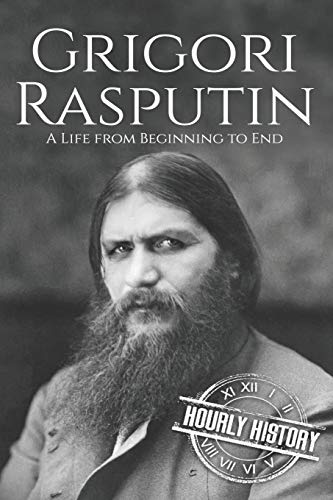
2. Grigori Rasputin
Grigori Rasputin traces the Siberian peasant and religious wanderer whose access to the family of Nicholas II made him a symbol of the late imperial court’s dysfunction. It examines his reputation as a healer and the confidence placed in him by Empress Alexandra during the illness…
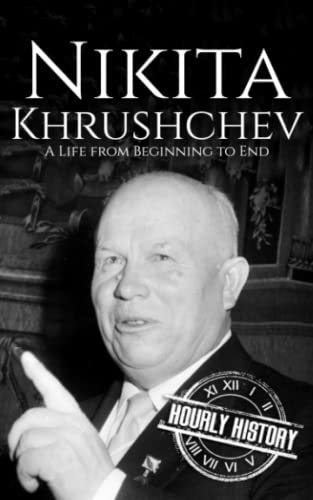
3. Nikita Khrushchev
Nikita Khrushchev follows the Soviet politician from his rise under Stalin to leadership after the dictator’s death. It examines his role in party administration, wartime government and the power struggle that allowed him to become the dominant figure of the 1950s. The biography covers de-Stalinisation, the…
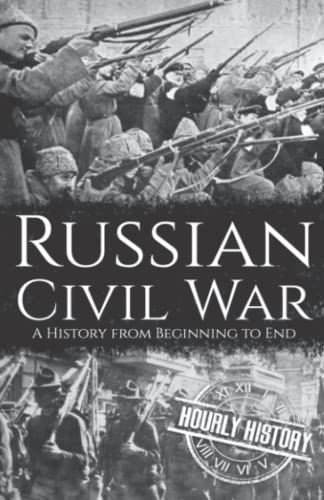
4. Russian Civil War
The Russian Civil War surveys the struggle that followed the Bolshevik seizure of power in 1917. It traces the formation of Red and White armies, fighting across immense territories and the interventions of foreign powers, nationalist movements and peasant forces. The book examines war communism, terror,…
5. Russian Empire
The Russian Empire presents the expansion and government of a vast Eurasian state from the age of Peter the Great to the fall of Nicholas II. It follows military conquest, administrative centralisation and the incorporation of peoples across the Baltic, Caucasus, Central Asia and Siberia. The…
6. Russian Revolution
The Russian Revolution traces the crises that overthrew the Romanov monarchy and brought the Bolsheviks to power in 1917. It explains the pressures of war, food shortages, labour unrest and political exclusion that produced the February Revolution and the provisional government. The account follows the soviets,…
7. Russo-Japanese War
The Russo-Japanese War examines the conflict of 1904–1905 over influence in Korea and Manchuria. It traces failed diplomacy, Japan’s attack on Port Arthur and the campaigns fought under the severe logistical conditions of northeast Asia. The book follows the siege of Port Arthur, the battle of…
8. Soviet Union
The Soviet Union surveys the state created after revolution and civil war and dissolved in 1991. It follows Lenin’s consolidation of power, Stalin’s forced industrialisation and collectivisation, political terror and the immense wartime struggle against Nazi Germany. The book then examines superpower rivalry, de-Stalinisation, economic stagnation…