Grigori Rasputin was a Siberian peasant and religious wanderer who gained access to the Russian imperial family. Alexandra Feodorovna believed that his prayers could ease the haemophiliac attacks of Tsarevich Alexei, and his continued presence at court became politically damaging.
Rasputin's influence at court depended above all on the confidence of Empress Alexandra, who believed that his presence and prayers could ease the haemophilia of her son Alexei. His access to the imperial family, scandalous public reputation and interventions in patronage made him a focus of hostility during the First World War. A group of aristocratic conspirators murdered him in Petrograd in December 1916, only weeks before the crisis that ended the monarchy.
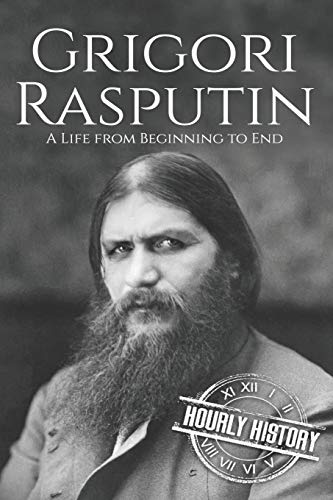
Barbara Hambly’s Blood Maidens places Rasputin inside the aristocratic and occult circles of wartime St Petersburg, where his access to the imperial family makes him a natural presence in a supernatural espionage plot. Simon Sebag Montefiore’s Sashenka shows the fashionable world around Rasputin from the perspective of a young woman being drawn towards the Bolshevik underground. John Boyne’s The House of Special Purpose brings its protagonist into the Romanov court, where Rasputin’s intimacy with Nicholas II and Alexandra forms part of the atmosphere preceding revolution. C. W. Gortner’s The Romanov Empress presents him through Dowager Empress Maria Feodorovna’s alarm at his influence over Alexandra. Hourly History’s Grigori Rasputin supplies the biographical framework, tracing his rise from Siberian wanderer to symbol of the monarchy’s loss of credibility and his murder in 1916.