Muhammad Ahmad ibn Abd Allah was a Sudanese religious leader born near Dongola in 1844. Trained in Islamic scholarship and associated with the Sammaniyya Sufi order, he developed a reputation for ascetic piety before proclaiming himself the expected Mahdi in 1881. His call for religious renewal quickly became an armed revolt against the Turco-Egyptian administration of Sudan. Mahdist forces defeated several government expeditions, most dramatically destroying the army of William Hicks in 1883 and bringing large areas under the movement’s control.
After Britain occupied Egypt in 1882, the Sudanese crisis became entangled with British imperial policy. Mahdist forces surrounded Khartoum, where General Charles Gordon had been sent during the attempted evacuation of Egyptian authority. The city fell on 26 January 1885 and Gordon was killed. Muhammad Ahmad established the centre of his new state at Omdurman but died only months later, on 22 June 1885, probably from disease. His deputy Abdallahi ibn Muhammad succeeded him as khalifa and maintained the Mahdist state until its defeat by Anglo-Egyptian forces in 1898.
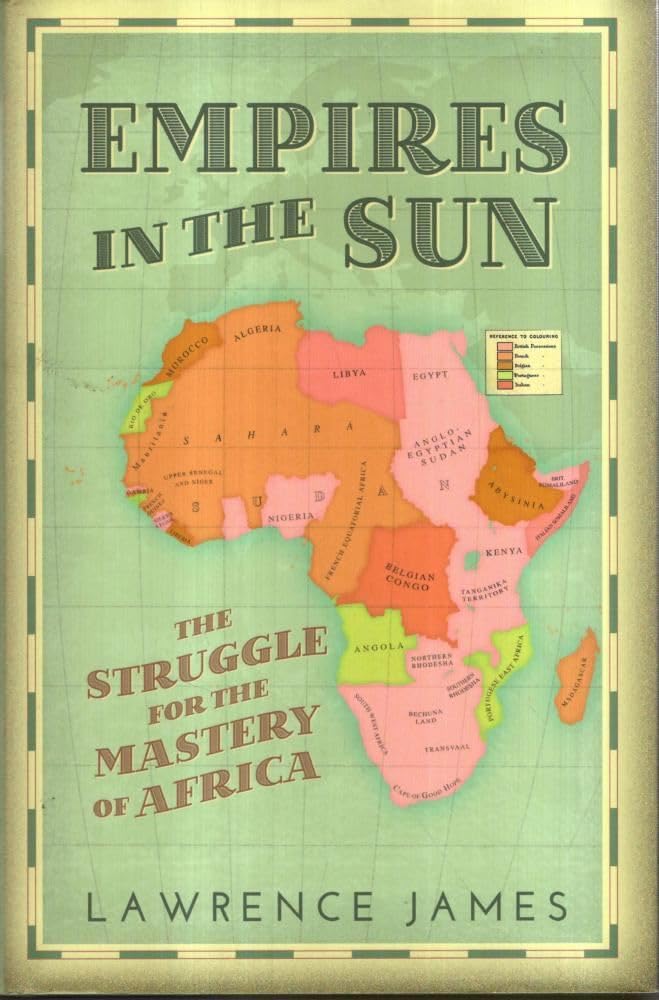
John Wilcox’s Siege of Khartoum and Wilbur Smith’s The Triumph of the Sun place fictional protagonists inside the encirclement of Gordon’s Khartoum and make Muhammad Ahmad’s army the decisive historical force outside the city. Lawrence James’ Empires in the Sun and Thomas Pakenham’s The Scramble for Africa discuss the Mahdist revolt within the larger contest over European empire in Africa. Together the books show both Sudanese state formation and its imperial context. Thomas Pakenham’s The Scramble for Africa: The White Man’s Conquest of the Dark Continent from 1876 to 1912 treats Muhammad Ahmad through the rise of the Mahdist state in Sudan, using that resistance to show how African political and military power complicated European imperial expansion.