Maximilien Robespierre was a leading Jacobin politician during the French Revolution and a central figure in the Terror. His fall and execution in July 1794 marked the end of the most radical phase of revolutionary government.
A lawyer from Arras before 1789, Robespierre entered the Estates-General and became increasingly influential through the Jacobin movement. He defended republican government, popular sovereignty and stringent measures against enemies of the Revolution, joining the Committee of Public Safety in 1793. His association of revolutionary virtue with coercion made him inseparable from the Terror, and his overthrow on 9 Thermidor led to his execution the following day.
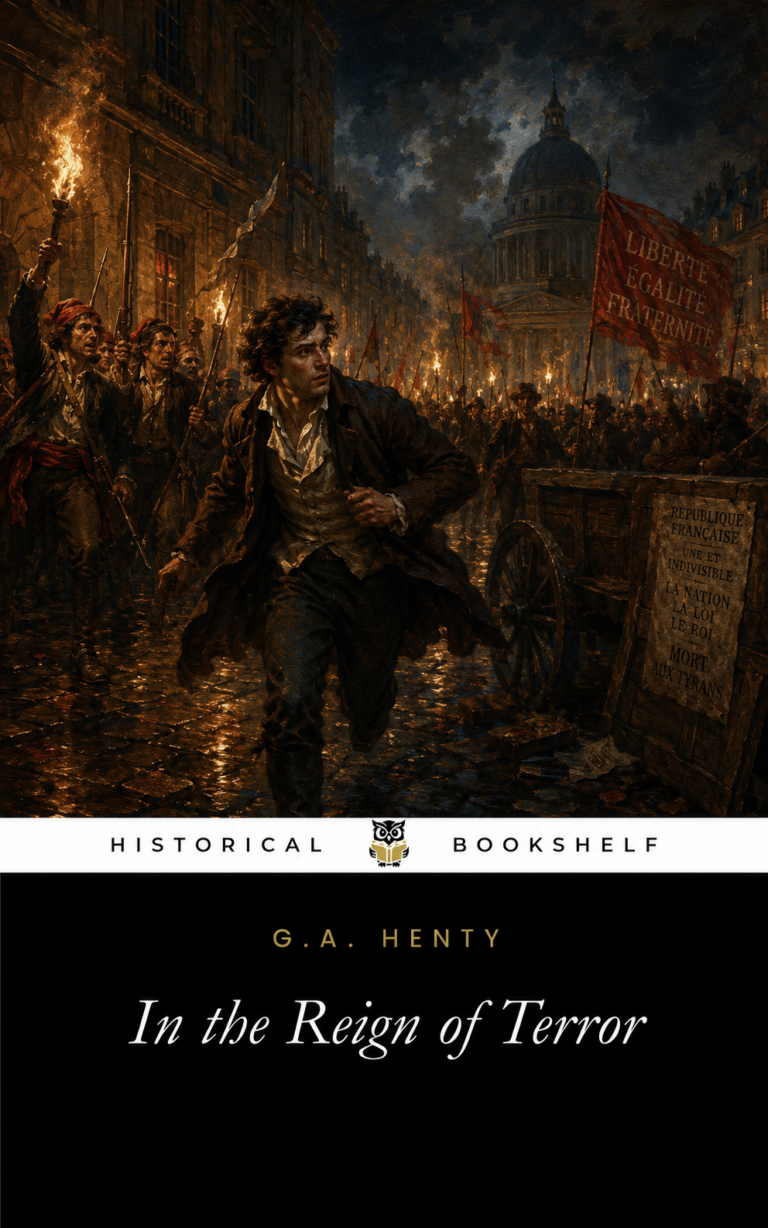
G. A. Henty’s In the Reign of Terror places Robespierre among the real revolutionary leaders whose government determines whether its fictional characters are denounced, imprisoned or able to escape. Baroness Orczy’s A Child of the Revolution closes around his fall in the Thermidorian Reaction, while The Triumph of the Scarlet Pimpernel uses the factional struggle surrounding Robespierre and Tallien as the political machinery behind Percy Blakeney’s interventions. Michelle Moran’s Madame Tussaud encounters Robespierre through the public figures whose faces and deaths the wax modeller must reproduce as revolution becomes Terror. Hourly History’s French Revolution places his leadership of the Committee of Public Safety, the Terror and his execution within the wider collapse and radicalisation of the revolutionary state.