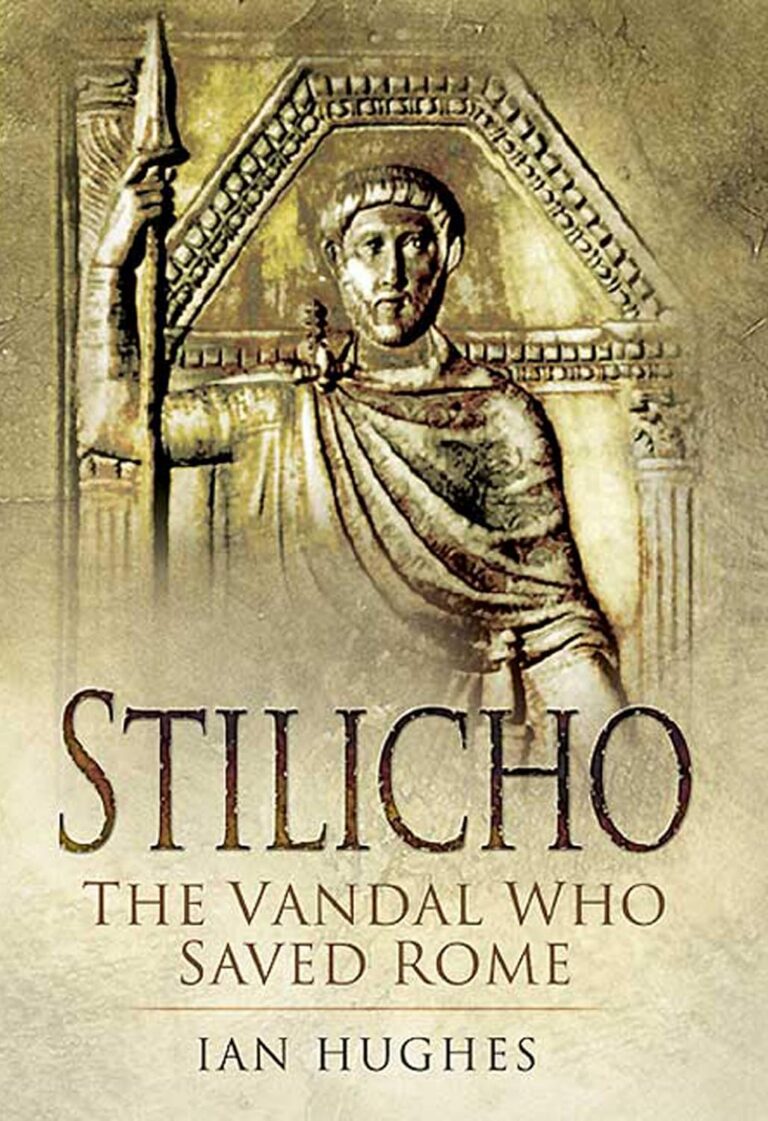
Stilicho was a Roman general of Vandal origin who became the dominant military figure in the western empire under Honorius. He fought Goths and internal rivals before being executed in 408, a blow to western Roman stability.
As the chief general of the western court, Stilicho defended Honorius's regime against internal usurpers and Gothic armies and claimed a broad guardianship over the young emperors of both halves of the empire. He defeated Alaric's forces in Italy at Pollentia and Verona but could not permanently resolve the Gothic problem. Court enemies persuaded Honorius that Stilicho was plotting treason, and he was arrested and executed at Ravenna in 408.
Adam Lofthouse’s Barbarian and the Throne meets Stilicho as a rising officer under Theodosius I, drawing the Gothic Videricus into the Roman army before the civil war that culminates at the Frigidus. Douglas Jackson’s The Barbarian moves to 406, when Marcus Flavius Victor seeks Stilicho as the one western commander still capable of organising defence while Radagaisus invades Italy and Honorius’s court turns against its own general. Ian Hughes’s Stilicho reconstructs the campaigns against Alaric and Radagaisus, the negotiations that made him vulnerable to accusations of treason and his execution in 408. Nick Holmes’s The Fall of Rome places those decisions inside the chain leading from Adrianople to Alaric’s sack of Rome. Adrian Goldsworthy’s The Fall of the West broadens the question further, showing why a state increasingly dependent on commanders such as Stilicho became so exposed when internal politics destroyed them.