c. 1100–c. 1165/66
Muhammad al-Idrisi was an Arab Muslim geographer and cartographer born at Ceuta around 1100 into a family with connections to the former Hammudid rulers of al-Andalus and North Africa. He studied and travelled widely in the western Mediterranean before entering the court of the Norman king Roger II of Sicily. Palermo brought together Arabic, Greek, Latin and Norman intellectual traditions, giving al-Idrisi an unusually well-connected base from which to compile geographical information about Europe, Africa and Asia.
Roger sponsored an ambitious survey that drew on earlier Greek and Arabic geography, reports from merchants and travellers, and information gathered through inquiry. The result, the Nuzhat al-mushtāq fī ikhtirāq al-āfāq, commonly called the Book of Roger or Tabula Rogeriana, was completed in the mid-twelfth century and accompanied by a sophisticated set of regional maps. It became one of the major achievements of medieval geography. Al-Idrisi’s exact death date is uncertain, usually placed around 1165 or 1166, so the previous 1110–1166 lifespan was too definite at both ends.
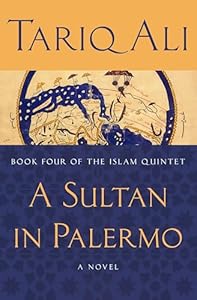
Tariq Ali’s A Sultan in Palermo makes al-Idrisi the central historical protagonist at Roger II’s court. His work on the great geographical survey allows the novel to explore Norman Sicily’s Arabic-speaking elite, religious coexistence, political inequality and the pressures facing Muslim intellectuals under Christian rule. The mapmaking project is historical; the personal conflicts, conversations and inner loyalties through which Ali tells the story are imaginative reconstructions. Tariq Ali’s A Sultan in Palermo (Islam Quintet 4) makes Muhammad al-Idrisi its central historical protagonist, following the geographer at Roger II’s Sicilian court as he works on the survey later associated with the Tabula Rogeriana.