Constantine VIII was a Byzantine emperor of the Macedonian dynasty who spent most of his life as a junior co-emperor before becoming sole ruler in 1025. Crowned in childhood alongside his elder brother Basil II, he played only a limited role while Basil conducted the wars and administration that made his reign one of Byzantium’s most powerful. Constantine nevertheless provided dynastic continuity and was already in his sixties when Basil died without children.
Constantine’s sole reign lasted only three years, from 1025 to 1028. Byzantine chroniclers portray him as devoted to court pleasures and quick to punish suspected conspirators, although those accounts were written within moralising traditions and should not be treated as neutral character studies. His greatest political consequence lay in the succession: he had no surviving sons, so the imperial line passed through his daughters Zoe and Theodora, whose marriages and reigns shaped the turbulent politics of the mid-eleventh century.
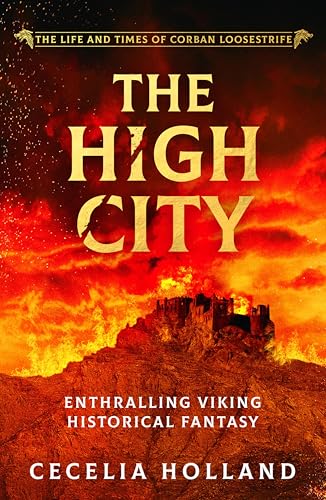
Cecelia Holland’s The High City is the linked novel in which Constantine VIII appears. Its Byzantine court setting uses the tensions of dynastic politics, aristocratic ambition and imperial succession to place the ageing emperor within the world that followed Basil II’s long dominance and preceded the succession struggles centred on Zoe and Theodora.