Gordian I was an elderly senator and provincial governor who was proclaimed emperor in Africa in AD 238 after a revolt against the fiscal agents of Maximinus Thrax. He accepted the throne jointly with his son Gordian II and received senatorial recognition in Rome.
Their forces were quickly defeated by the governor of neighbouring Numidia, whose legion remained loyal to Maximinus. After learning of his son’s death, Gordian I took his own life, ending a reign of only a few weeks. His brief reign shows how local tax grievances could become an empire-wide struggle once the senate and armies chose opposing rulers.
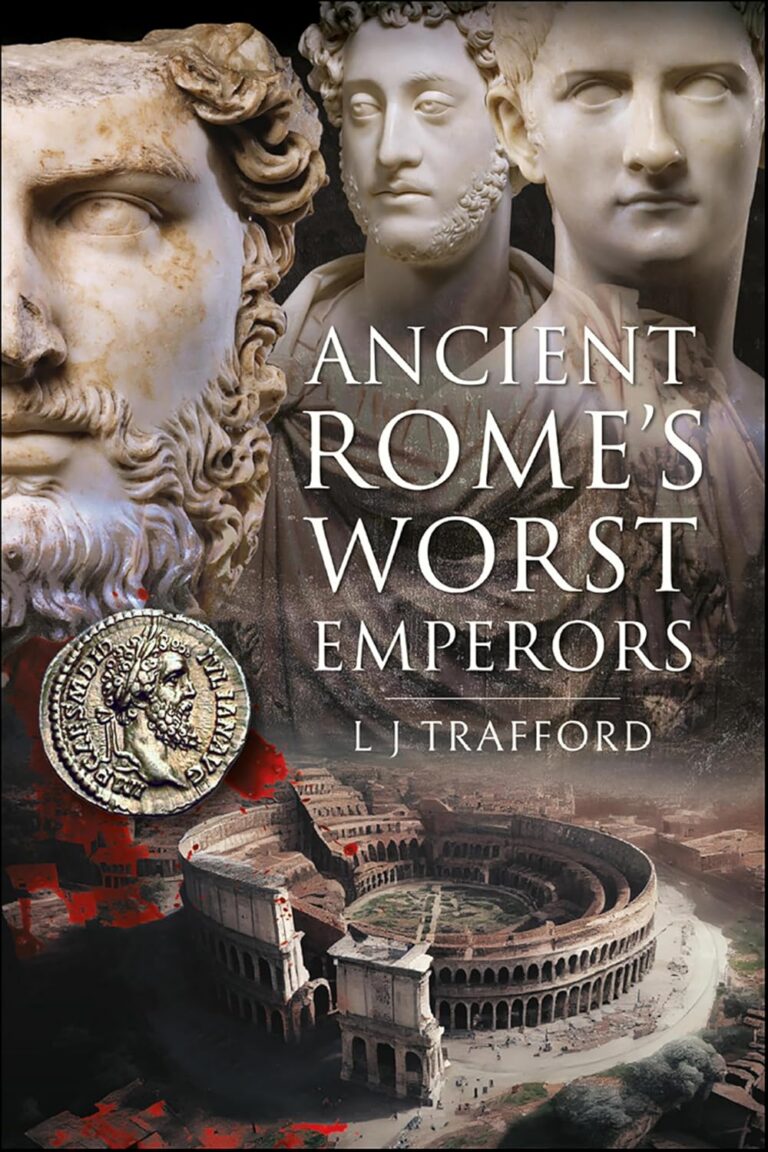
In L. J. Trafford’s Ancient Rome’s Worst Emperors, the selected cases include notorious figures such as Caligula, Commodus and Elagabalus alongside less predictable choices including Galba, Vitellius, Nerva, Gordian I and Valentinian II. Ancient histories, senatorial hostility and posthumous propaganda are tested rather than accepted at face value. In Harry Sidebottom’s Blood and Steel, in AD 238 opposition to Maximinus Thrax turns into open revolt. Landowners and officials in Roman Africa proclaim the elderly Gordian I and his son Gordian II as emperors, forcing the Senate to decide whether to support them or submit to the soldier-emperor marching towards Italy.