Mahatma Gandhi was an Indian lawyer and political leader who developed mass nonviolent resistance as a central strategy against British rule. His campaigns included non-cooperation, the Salt March and efforts to reduce communal violence, and he was assassinated in 1948 shortly after Indian independence and partition.
Gandhi’s political methods were shaped during more than two decades in South Africa, where he organised Indian communities against discriminatory legislation and developed the practice he later called satyagraha. Returning to India in 1915, he transformed himself from a lawyer and community organiser into a mass political leader, combining civil disobedience with campaigns for village industry, Hindu–Muslim cooperation and the removal of untouchability. His moral authority was enormous, but his political programme and social views were also contested by contemporaries including B. R. Ambedkar, Muslim League leaders and revolutionary nationalists.
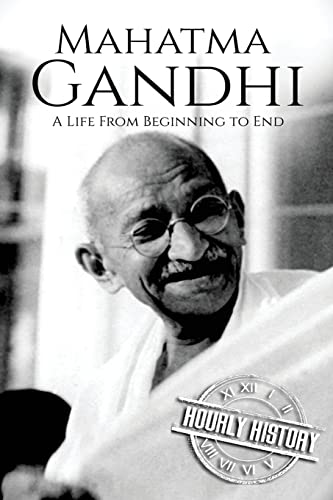
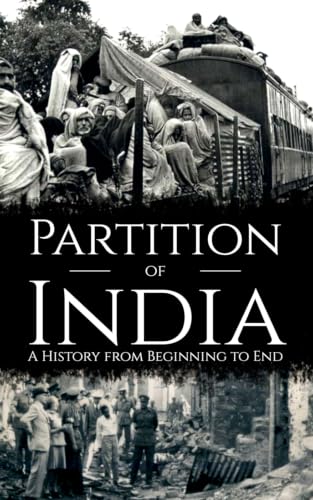
Hourly History’s Mahatma Gandhi traces the lawyer and political organiser who made nonviolent mass action central to the struggle against British rule. In Lawrence James’ Raj, after the Crown replaced Company rule, the book examines the institutions and contradictions of the Raj: viceroys and princely states, railways and law, military recruitment, racial hierarchy, famine and economic extraction. Imperial confidence under Victoria and Disraeli gives way to organised nationalism, mass politics and the competing demands that accompanied Gandhi’s campaigns and the Second World War. For broader historical treatment of Mahatma Gandhi, see Kim A. Wagner’s Amritsar 1919, Nitish K. Sengupta’s Bengal Divided, Captivating History’s History of India, Nitish K. Sengupta’s Land of Two Rivers, and Hourly History’s The Partition of India.