As an Amazon Associate I earn from qualifying purchases. Affiliate disclosure.

Home / People / William Henry Harrison

Historical person

William Henry Harrison

1773–1841

William Henry Harrison was an American soldier, territorial governor and politician who became the ninth president of the United States. Born into a prominent Virginia family in 1773, he entered the army and served in the Northwest Territory before becoming governor of Indiana Territory. His policies encouraged American settlement and land cessions from Indigenous nations. Resistance led by Tecumseh and Tenskwatawa culminated in the 1811 Battle of Tippecanoe, which Harrison’s supporters later transformed into a central part of his political reputation.

During the War of 1812 Harrison commanded American forces in the Northwest and won a major victory at the Battle of the Thames in 1813, where Tecumseh was killed. After military service he held several elected and diplomatic offices and became a Whig presidential candidate. The celebrated ‘log cabin and hard cider’ campaign of 1840 presented him as a frontier soldier despite his elite background. Harrison took office in March 1841 but died from illness on 4 April, making his presidency the shortest in United States history.

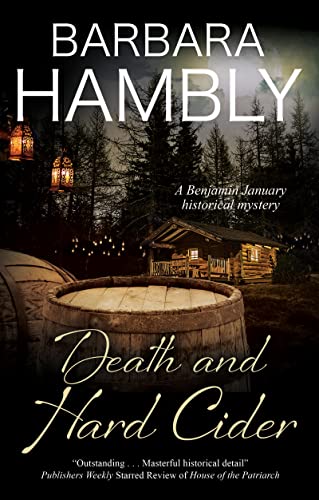
Barbara Hambly’s Death and Hard Cider places William Henry Harrison at the centre of the political spectacle surrounding the 1840 Whig campaign. New Orleans prepares a huge Harrison rally, and the receptions, dances and partisan crowds provide work—and investigative access—for Benjamin January after a murder. Harrison himself is less a continuing character than the focus of a mass campaign whose slogans, hard-cider imagery and factional rivalries create the social pressure around the mystery.

Series

Historical novels and book series featuring William Henry Harrison (1 series)

Benjamin January Mysteries in Order

by Barbara Hambly 21 books 4.2(19,232)

Benjamin January is a free man of colour, a trained surgeon and a professional musician living in New Orleans during the decades before the American Civil War. His investigations move through Creole drawing rooms, music halls, hospitals, plantations, riverboats and slave quarters, where formal law is shaped by…

All books in this series