Charles VIII inherited the French throne as a minor and initially ruled under the regency of his elder sister Anne of France. His campaign against Brittany culminated in his 1491 marriage to Anne of Brittany, strengthening French control over the duchy.
In 1494 he invaded Italy to press an Angevin claim to Naples, helping to begin the prolonged Italian Wars. His marriage to Anne of Brittany and invasion of Italy reshaped the French monarchy’s territorial and diplomatic priorities. Charles VIII of France was born in Château d’Amboise.
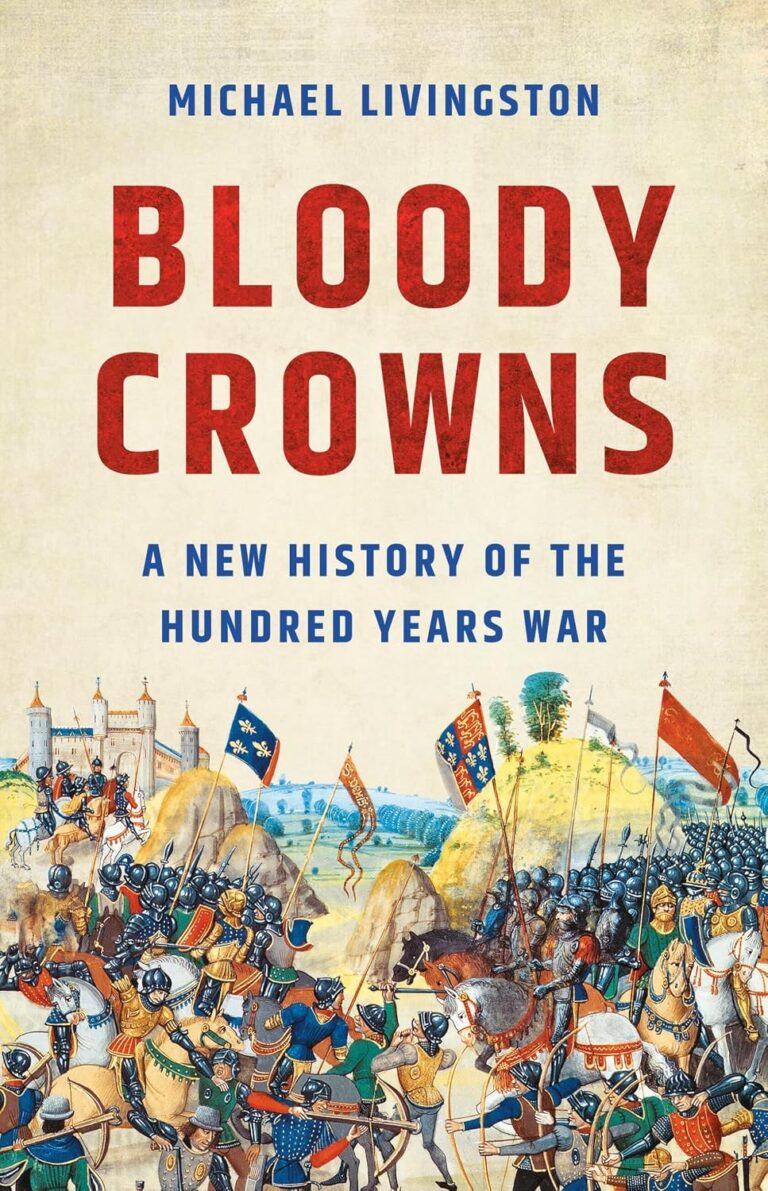
Michael Livingston’s Bloody Crowns argues that an English-centred account of 1337–1453 obscures a larger struggle over France and the political order of western Europe, beginning his narrative in 1292 and carrying it through two centuries of warfare involving England, France, Burgundy, Brittany, Flanders, Scotland and other powers. Crécy, Poitiers, Agincourt and Orléans appear alongside dynastic claims, diplomacy, taxation and military reform, with the story continuing to 1492 as Brittany’s absorption and the Treaty of Étaples help establish more recognisable French and English states. Michael Livingston’s The Two Hundred Years War shifts the perspective towards France’s long effort to define its borders and political identity, beginning with the maritime and feudal crisis of 1292. Further fictional perspectives on Charles VIII of France can be found in Rozsa Gaston’s Anne and Charles, Rozsa Gaston’s Anne and Louis, Rozsa Gaston’s Margaret of Austria, Keira Morgan’s The Importance of Sons, and Keira Morgan’s The Importance of Wives.