Lobengula was the second and last king of the independent Northern Ndebele, or Matabele, kingdom. Succeeding Mzilikazi in 1870, he ruled a powerful state centred in present-day Zimbabwe while facing increasing pressure from missionaries, concession seekers and the British South Africa Company during the scramble for southern African territory.
Concessions obtained under pressure, especially the Rudd Concession, enabled Cecil Rhodes’s British South Africa Company to claim mineral and political rights. The company’s invasion in 1893 destroyed Lobengula’s kingdom and incorporated Matabeleland into its colonial territory.
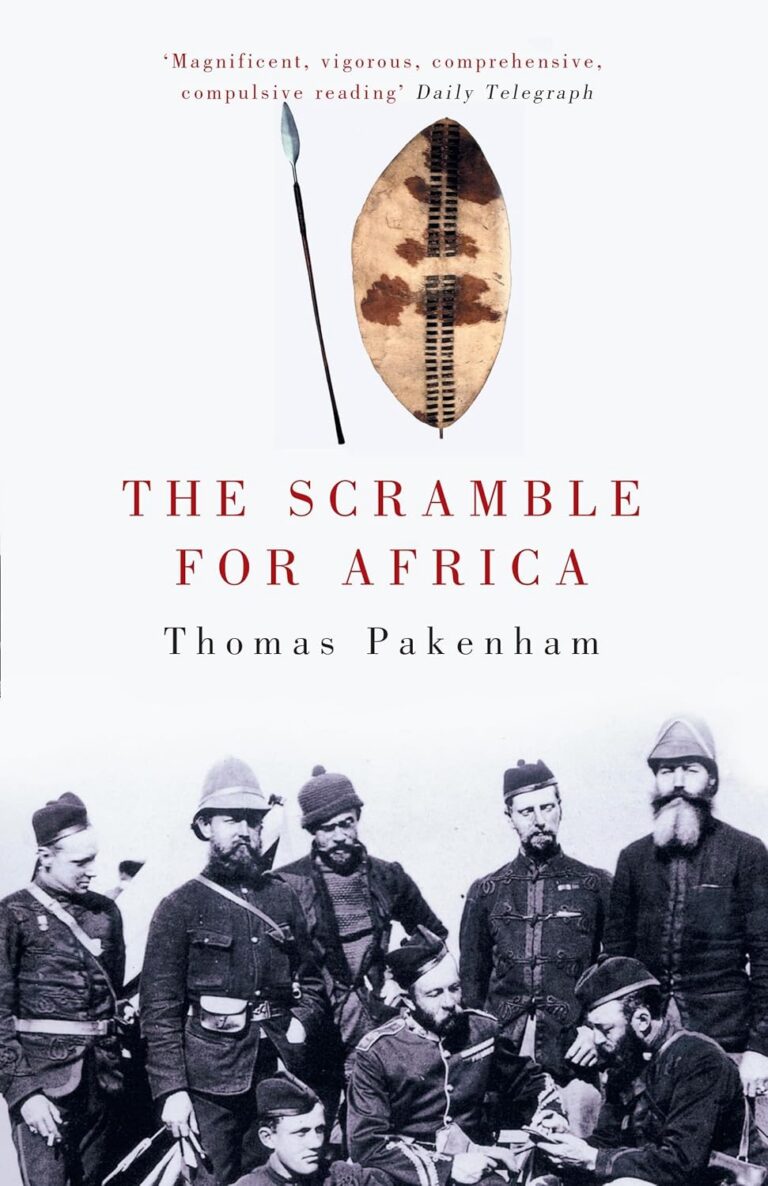
Thomas Pakenham’s The Scramble for Africa: The White Man’s Conquest of the Dark Continent from 1876 to 1912 moves across the Congo basin, the Nile valley, West Africa, Ethiopia and southern Africa to show that partition required diplomacy, deception and repeated military conquest. African rulers and commanders—including Menelik II, Samori Ture and Lobengula—negotiated, resisted or adapted under extreme pressure, while the Mahdist state and the Fashoda confrontation reveal the intersection of African politics with European rivalry. John Wilcox’s The Shangani Patrol places Lobengula and his Ndebele kingdom in direct conflict with Cecil Rhodes’s British South Africa Company during the First Matabele War, making the king’s resistance central to the novel’s historical setting.