Alfonso VIII ruled Castile from 1158 to 1214 and spent much of his reign contesting territory with neighbouring Christian kingdoms and the Almohad rulers of al-Andalus. His defeat at Alarcos in 1195 was followed by the major Christian victory at Las Navas de Tolosa in 1212. His marriage to Eleanor of England also connected the Castilian court closely to the Angevin world.
The strongest treatments place Las Navas de Tolosa within a complex Iberian landscape of shifting alliances, frontier communities and political rivalry rather than presenting the conflict as a simple, continuous struggle between two unified religious blocs.
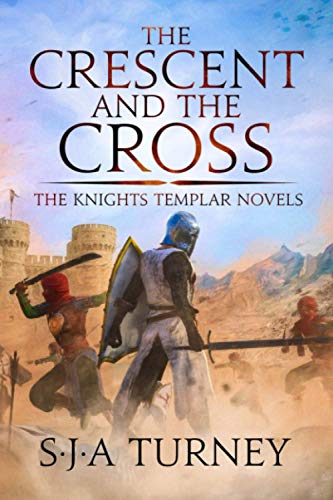
Simon Turney’s The Crescent and the Cross (Knights Templar) places Alfonso VIII among the Christian rulers who assemble the coalition against the Almohad caliph Muhammad al-Nasir in 1212. The memory of Alfonso’s earlier defeat at Alarcos gives the campaign personal and political weight, while the fictional Templar Arnau moves through the rivalries and military preparations that culminate in Alfonso’s victory at Las Navas de Tolosa.