Katherine Paterson is an American author best known for children’s and young-adult fiction that treats grief, exclusion, family conflict and moral responsibility with unusual seriousness. Born in China to missionary parents, she experienced repeated displacement during the Sino-Japanese conflict and the Second World War before her family settled in the United States. She later studied literature and religious education, taught in rural Virginia and spent four years living and working in Japan. Paterson has received two Newbery Medals, for Bridge to Terabithia and Jacob Have I Loved, and two National Book Awards, for The Master Puppeteer and The Great Gilly Hopkins. Her wider honours include the Hans Christian Andersen Award and the Astrid Lindgren Memorial Award.
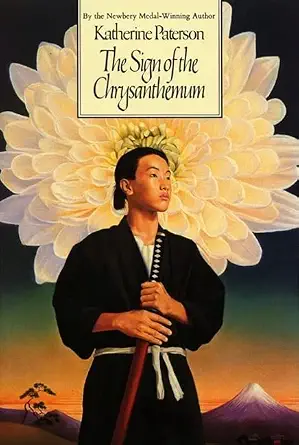
Several of Paterson’s novels are historical fiction. The Sign of the Chrysanthemum, Of Nightingales That Weep and The Master Puppeteer draw on medieval and early modern Japan, reflecting her knowledge of the country’s language and culture. Lyddie follows a young Vermont farm girl who becomes a textile-mill worker in 1840s Massachusetts, while Jip, His Story addresses slavery, identity and the Underground Railroad in nineteenth-century America. Bread and Roses, Too is set during the 1912 Lawrence textile strike, and My Brigadista Year follows a teenage volunteer in Cuba’s 1961 national literacy campaign. These novels use young protagonists to make labour, war, slavery, political change and social inequality accessible without simplifying their human consequences.

 Geoffrey Trease
44 books
Geoffrey Trease
44 books
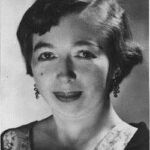 Rosemary Sutcliff
38 books
Rosemary Sutcliff
38 books
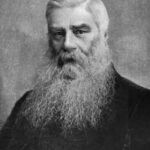 G. A. Henty
80 books
G. A. Henty
80 books
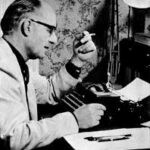 Henry Treece
35 books
Henry Treece
35 books