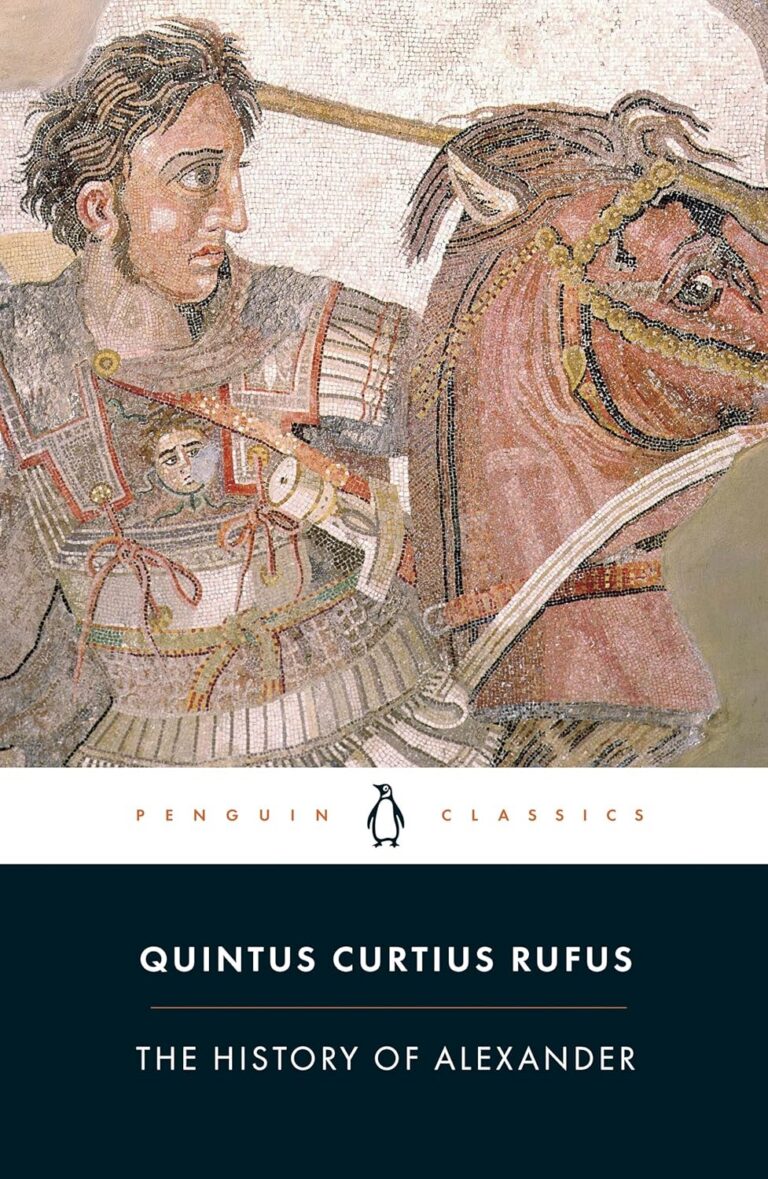
Quintus Curtius Rufus was a Roman historian, probably writing during the first century CE, although almost nothing certain is known about his identity or career. His Histories of Alexander the Great was composed several centuries after Alexander’s death, so Curtius was not an eyewitness. He could nevertheless draw upon earlier Greek and Hellenistic accounts that were still available in antiquity but have since disappeared. His narrative appears to depend heavily on Cleitarchus, or on the historical tradition associated with him, while Curtius also refers to Ptolemy and the later historian Timagenes. By comparing Curtius with Diodorus, Plutarch, Justin and Arrian, modern historians can identify material that probably originated with Alexander’s contemporaries or with writers who had access to veterans of the campaigns. Curtius’s original history contained ten books, but Books One and Two and portions of several later books have been lost.
Curtius is particularly valuable because his account offers a different vision of Alexander from the more admiring military history written by Arrian. He presents Alexander as a brilliant commander whose victories, wealth and increasing power gradually encouraged anger, suspicion, excessive drinking and autocratic behaviour. His vivid descriptions of battles, conspiracies, royal ceremonies, Persian customs and Alexander’s difficult campaigns in Central Asia and India preserve details found nowhere else. However, Curtius wrote for a Roman audience and shaped his material as a dramatic and moralising narrative. His elaborate speeches were literary reconstructions rather than transcripts, and his interest in personal conflict, fortune and the corrupting effects of absolute power could influence how he selected and arranged events. His history is therefore an indispensable source, but it is most reliable when read critically alongside Arrian and the other surviving Alexander historians.

 Arrian
 Plutarch
 Diodorus Siculus
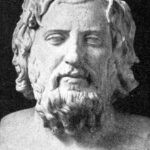 Xenophon
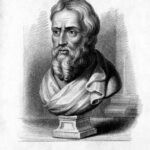 Herodotus