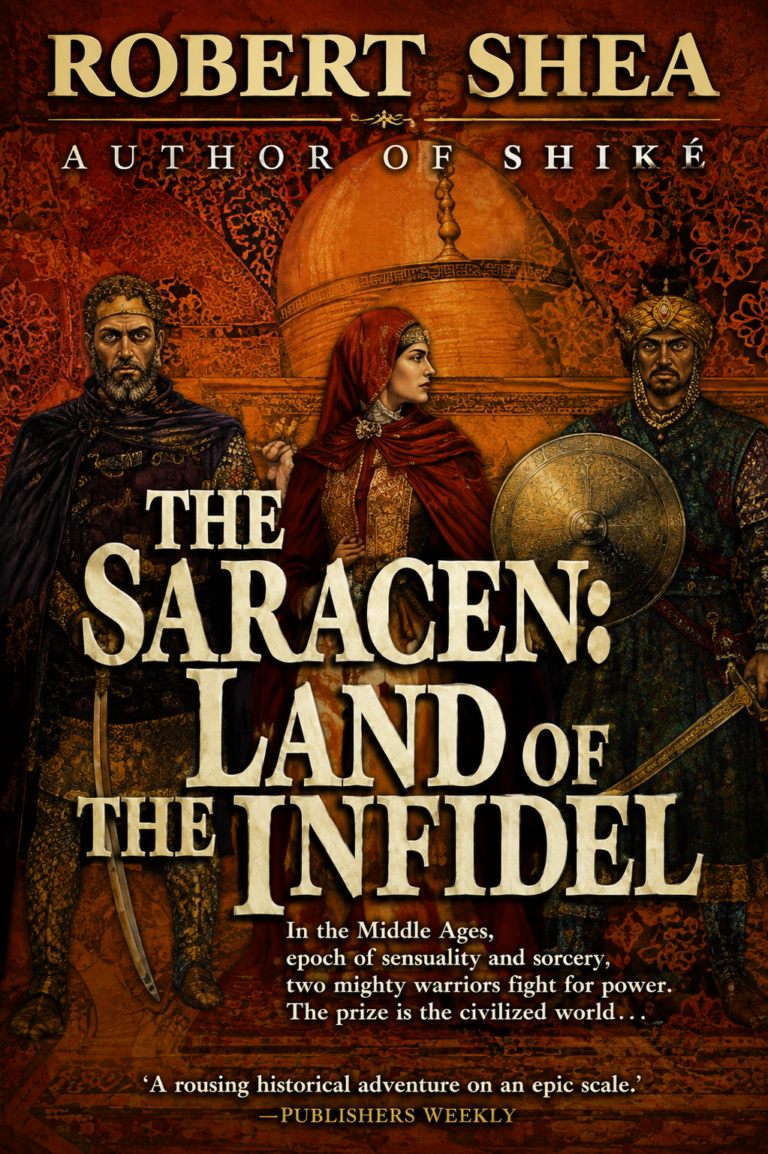
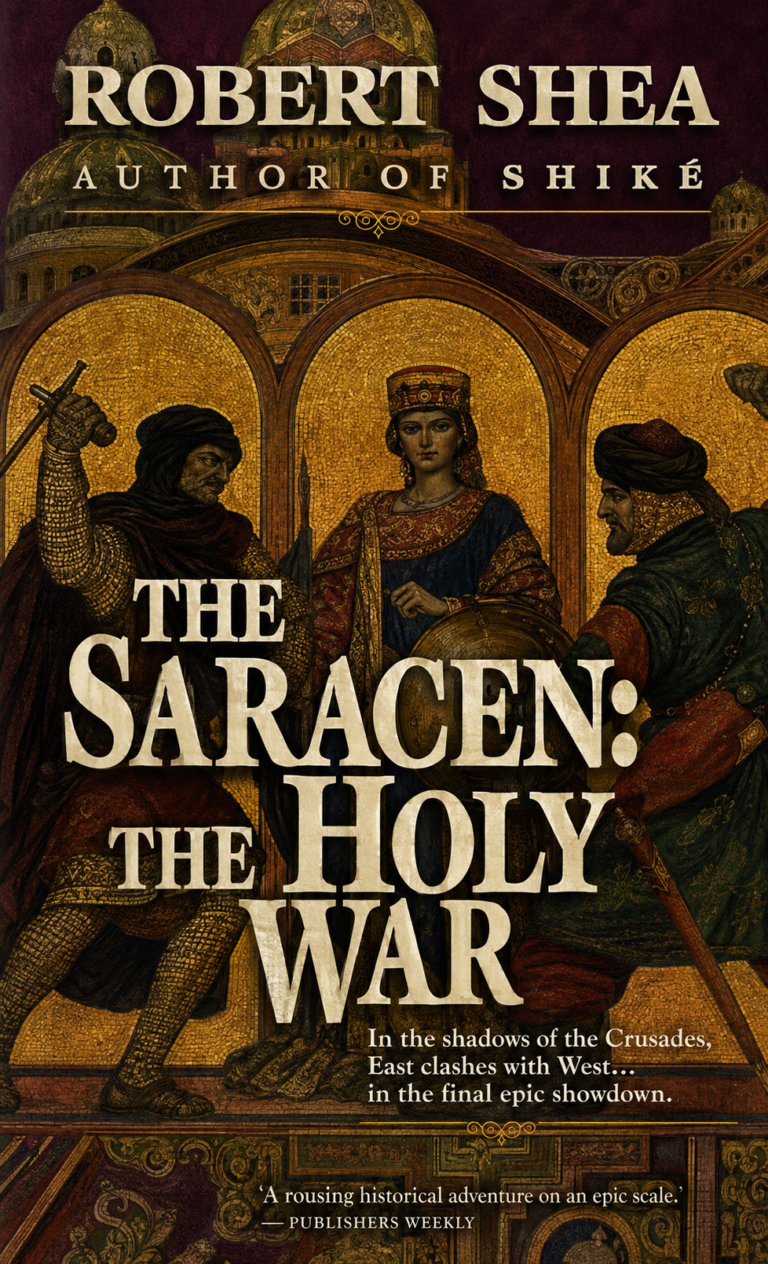
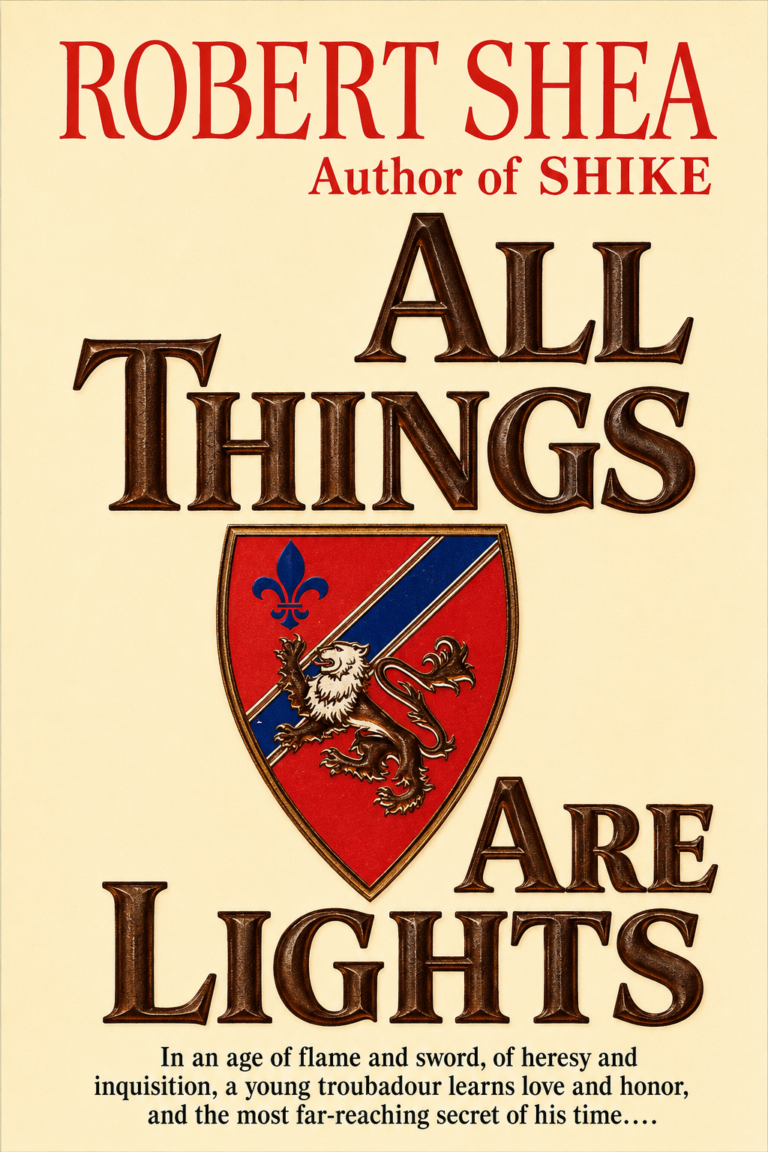
Louis IX was king of France from 1226 to 1270 and the leader of the Seventh and Eighth Crusades. His piety, royal government and failed Egyptian expedition made him one of the defining rulers of thirteenth-century France.
Louis IX strengthened royal justice and administration while cultivating an image of intensely Christian kingship. He led the Seventh Crusade to Egypt, where he was captured after the defeat at al-Mansurah and released for ransom, and later launched another crusade that ended with his death near Tunis in 1270. Canonised in 1297, he became a model of medieval Christian monarchy even as his reign also included persecution of Jews and coercive religious policies.
In Robert Shea’s All Things Are Lights, Roland de Vency, a troubadour and dispossessed knight of Languedoc, returns to the besieged Cathar refuge of Montségur hoping to rescue Diane de Combret, the woman he once intended to marry. Diane has taken the consolamentum and joined the Cathar perfecti, while Roland is also drawn to Nicolette, the spirited wife of his enemy Count Amalric de Gobignon. Their intertwined loyalties connect courtly love, religious persecution and the final destruction of a community already broken by the Albigensian Crusade. Roland’s service to Louis IX carries the conflict from France to the Seventh Crusade in Egypt. Damietta, al-Mansurah and the king’s captivity place the fictional lovers beside Louis, Margaret of Provence, Robert of Artois and the rising Mamluk commander Baibars. Shea combines documented events with Templar and mystical traditions, using competing faiths and secret brotherhoods to ask whether love, political power or religious certainty can justify violence. Louis IX of France is treated fictionally in Robert Shea’s The Saracen Holy War and Robert Shea’s The Saracen Land of the Infidel.