Hilda of Whitby was a seventh-century abbess and one of the most influential Christian leaders in Anglo-Saxon Northumbria. She governed communities at Hartlepool and Whitby, advised rulers and churchmen, and hosted the Synod of Whitby in 664. Bede also associated her household with the poet Cædmon and praised her skill in teaching and administration.
Hilda’s monastery at Whitby became an important centre of learning and ecclesiastical life, educating several men who later became bishops. In 664 she hosted the Synod of Whitby, where King Oswiu chose Roman rather than Ionan calculations for Easter and related customs. Bede’s portrait of Hilda emphasises her wisdom, discipline and influence, making her one of the best-documented women of seventh-century England.
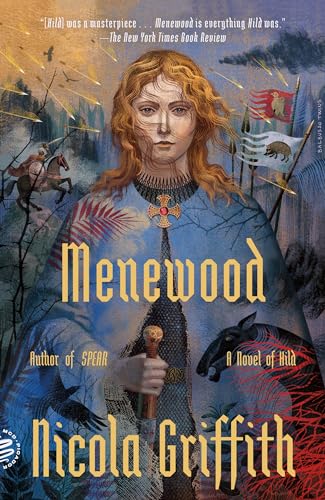
Nicola Griffith’s Hild is a speculative reconstruction of the childhood and adolescence of Hilda of Whitby, later one of the most influential abbesses of early medieval England. Hilda of Whitby is treated fictionally in Nicola Griffith’s Menewood.