Alessandro de’ Medici was the first hereditary duke to rule Florence after the final collapse of the Florentine Republic. Born in 1510, he belonged to the Medici family, although the precise identity of his father remains disputed. Imperial and papal support restored Medici control after the siege of Florence, and in 1532 Alessandro became duke under a new constitutional settlement that concentrated power in his hands and ended the city’s republican political order.
Alessandro’s rule relied heavily on the support of Emperor Charles V, whose illegitimate daughter Margaret of Parma he married in 1536. Florentine exiles portrayed him as tyrannical, though hostile political propaganda complicates the surviving picture of his private conduct. In January 1537 his cousin Lorenzino de’ Medici lured him to a private meeting and assassinated him. With no legitimate heir, power passed to the younger branch of the family under Cosimo I de’ Medici.
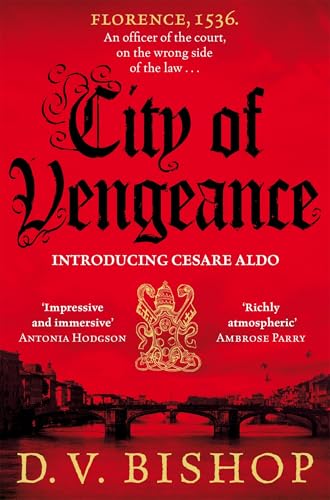
D. V. Bishop’s City of Vengeance makes Alessandro de’ Medici’s precarious rule one of the political stakes behind Cesare Aldo’s investigation. A conspiracy against the volatile duke threatens to push Florence into wider violence, so the murder inquiry is inseparable from faction, patronage and the danger surrounding Medici power. Alessandro is therefore not merely background colour: his vulnerability helps explain why the case carries consequences far beyond the original crime.