
Historical person
Æthelred, Lord of the Mercians
d. 911
Æthelred, Lord of the Mercians, was the ruler of western Mercia from the late ninth century until his death in 911. He emerged after the disappearance of King Ceolwulf II, when eastern Mercia was under Scandinavian rule and the surviving Mercian polity increasingly depended on alliance with Alfred the Great of Wessex. Æthelred accepted Alfred’s overlordship and married Alfred’s daughter Æthelflæd, creating the political partnership that joined Mercian and West Saxon resistance to Viking power. In 886 Alfred entrusted London to Æthelred, reinforcing his authority over territories traditionally associated with Mercia.
When renewed Viking armies attacked in the 890s, Æthelred campaigned alongside West Saxon and Welsh forces and was prominent in the victory at Buttington in 893. He and Æthelflæd also supported the restoration of towns and churches, including Gloucester, where they were later buried at St Oswald’s. His health appears to have declined in the later years of his rule, and Æthelflæd assumed an increasingly important governing role before succeeding him as Lady of the Mercians after his death in 911. Their daughter Ælfwynn briefly inherited Mercian authority after Æthelflæd’s death in 918.
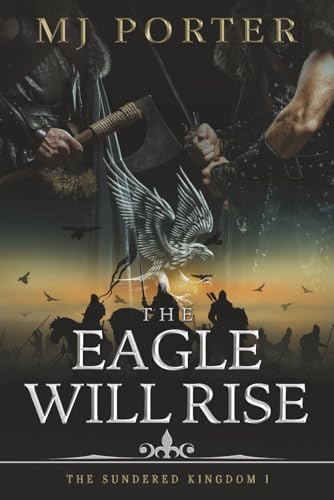
M. J. Porter’s The Eagle Will Rise is set in 880 and uses Æthelred as the contested heir around whom Mercia’s survival turns after the death of Ceolwulf II. The novel imagines him held by Alfred of Wessex and makes his recovery part of a struggle over whether western Mercia will remain a distinct political power or be absorbed by its neighbours. The captivity and rescue plot are fictional constructions, but the setting reflects the real uncertainty surrounding Mercian leadership and Æthelred’s emergence as Alfred’s allied ruler.
Standalone books
Standalone books featuring Æthelred, Lord of the Mercians (1 book)