Hilary Mantel is central to modern Tudor fiction, especially for readers interested in court politics, religious change and the psychology of power.
Hilary Mantel was born in Glossop, Derbyshire, in 1952. She studied law in London and Sheffield and spent periods living in Botswana and Saudi Arabia because of her husband’s work. Long before her international success, she wrote across several forms, including contemporary fiction, memoir, criticism and a large novel about the French Revolution. Her first published novel, Every Day Is Mother’s Day, appeared in 1985, while A Place of Greater Safety was published in 1992.
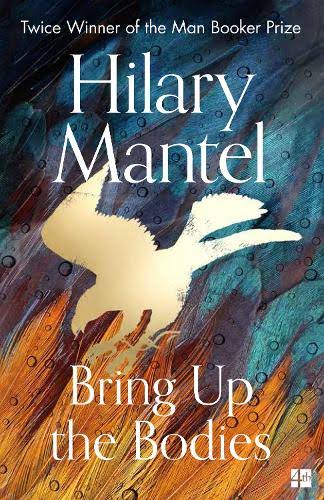
Mantel’s reputation as a historical novelist rests chiefly on the trilogy about Thomas Cromwell: Wolf Hall, Bring Up the Bodies and The Mirror and the Light. The first two volumes each won the Booker Prize. Rather than presenting Cromwell as a fixed historical type, Mantel reconstructs events through his alert, calculating perspective, showing how memory, patronage, law and intimate access shape Tudor power. Her prose creates immediacy without pretending that the past is fully knowable. Mantel died in 2022. Her work transformed modern expectations of biographical historical fiction and remains central to discussions of voice, evidence and the imaginative representation of political actors.



 Philippa Gregory
32 books
Philippa Gregory
32 books
 Alison Weir
35 books
Alison Weir
35 books
 Elizabeth Fremantle
7 books
Elizabeth Fremantle
7 books
 Margaret George
6 books
Margaret George
6 books
 David Field
46 books
David Field
46 books