
Historical person
Wilmer McLean
1814–1882
Wilmer McLean was a Virginia merchant and farmer remembered because two of the most famous moments of the American Civil War occurred near or inside homes occupied by his family. At the war’s beginning he lived near Manassas, where Confederate General P. G. T. Beauregard used his house as a headquarters during the First Battle of Bull Run in July 1861. Artillery fire struck the property, although the main fighting took place some distance away, and the McLeans later moved south.
By 1863 McLean had settled at Appomattox Court House, where he continued commercial dealings during the war. On 9 April 1865 his house was selected for the meeting at which Robert E. Lee surrendered the Army of Northern Virginia to Ulysses S. Grant. Officers and souvenir hunters subsequently removed furnishings from the room, turning the private home into an instant historic site. The popular saying that the war began in McLean’s front yard and ended in his front parlour exaggerates geography, but neatly captures his unusual connection to both Manassas and Appomattox.
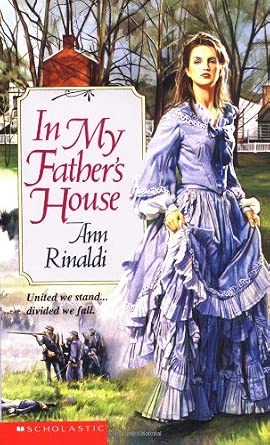
Ann Rinaldi’s In My Father’s House turns the famous coincidence of Wilmer McLean’s two Virginia homes into a civilian family story. Fighting reaches the McLean property near Manassas at the beginning of the Civil War; after the family moves in search of safety, their Appomattox house becomes the place where Robert E. Lee and Ulysses S. Grant agree surrender terms in April 1865. Seen through McLean’s daughters, his household becomes an unwilling witness to both the war’s opening violence and its symbolic conclusion.
Standalone books
Standalone books featuring Wilmer McLean (1 book)