
Historical person
Isabella d’Este
1474–1539
Isabella d’Este was born into the ruling Este family of Ferrara in 1474 and received the humanist education expected of an exceptionally well-connected Renaissance princess. In 1490 she married Francesco II Gonzaga, marquess of Mantua, and turned the Gonzaga court into one of the most celebrated centres of elite collecting and patronage in Italy. Her studiolo and grotta housed antiquities, paintings and luxury objects, and she negotiated commissions with artists including Andrea Mantegna, Perugino, Leonardo da Vinci and Titian.
Isabella’s importance was political as well as cultural. She governed Mantua during her husband’s absences and imprisonment, maintained an enormous diplomatic correspondence and used family networks to protect Gonzaga interests during the Italian Wars. After Francesco’s death she continued to promote the career of their son Federico and remained active in court politics. She was in Rome during the Sack of 1527, when her residence sheltered a large number of refugees. Isabella died at Mantua in 1539, leaving unusually rich correspondence through which her ambitions can be studied directly.
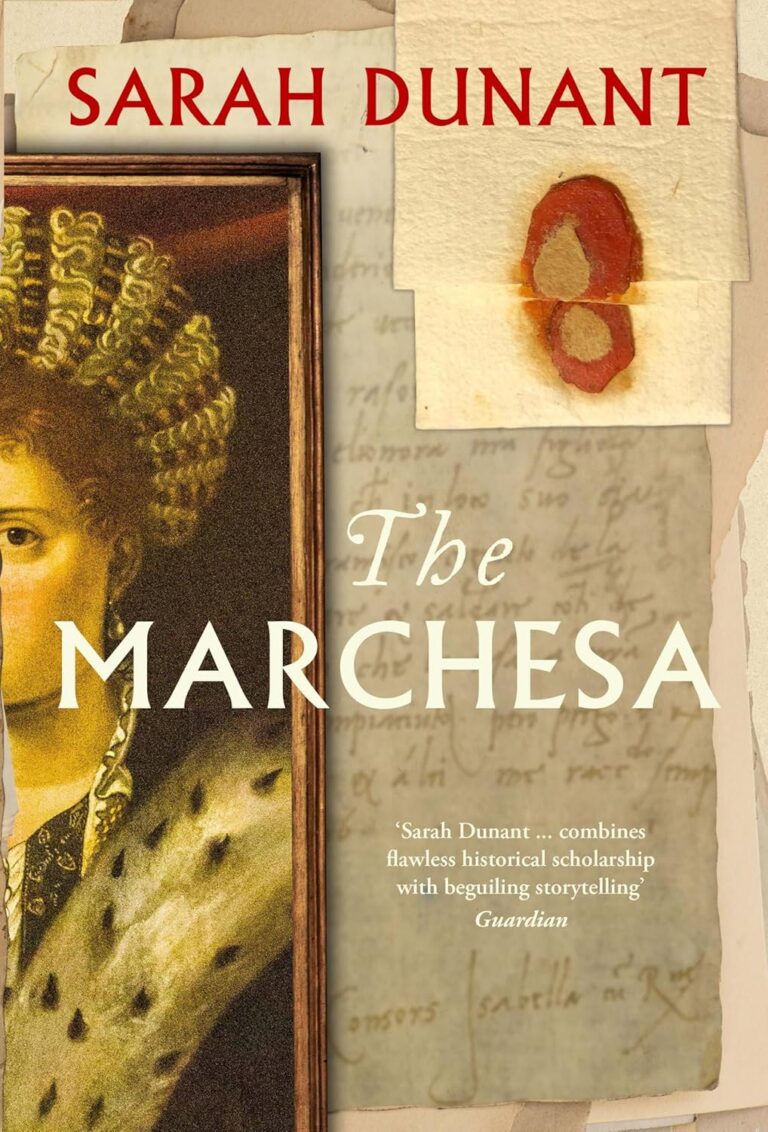
Sarah Dunant’s The Marchesa makes Isabella herself the centre of the narrative, using the extraordinary surviving correspondence as the basis for a retrospective reconstruction of her life. The novel explores her marriage, rivalry, collecting, motherhood and political calculation while inventing the private texture needed to connect the letters into a continuous voice. It is therefore unusually close to documentary material for historical fiction, but the interior monologue and modern framing remain imaginative.
Standalone books
Standalone books featuring Isabella d’Este (1 book)