Thomas Kyd was an English dramatist whose work helped establish the revenge tragedy as one of the defining forms of the Elizabethan stage. Born in London in 1558, the son of a scrivener, he received a strong grammar-school education and probably entered theatrical and literary employment during the 1580s. His authorship of The Spanish Tragedy is secure; the play became exceptionally popular and developed a dramatic vocabulary of murder, delayed vengeance, madness, ghosts and plays-within-plays that later dramatists repeatedly adapted.
Kyd’s career was damaged in 1593 when authorities searching his rooms found papers judged heretical. Under interrogation and torture, he said the documents belonged to Christopher Marlowe, with whom he had previously shared lodgings or employment. Kyd was released but appears not to have recovered his patronage or health and died in 1594. Much of his output is lost or disputed, including the possible existence of an earlier Hamlet play. His surviving work nevertheless exercised a major influence on Shakespeare and the development of English tragedy.
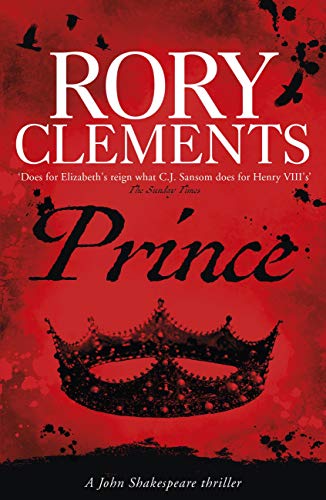
Rory Clements’s Prince brings Thomas Kyd into John Shakespeare’s investigation during the crisis of 1593, when bombings, plague and anti-immigrant agitation make London dangerously unstable. The inquiry passes through prisons and the theatrical world shared by Kyd and Christopher Marlowe, echoing the real surveillance and arrests that engulfed both writers that year. Kyd therefore belongs to the novel’s atmosphere of state suspicion, where drama, religious heterodoxy and political conspiracy can become difficult to separate.