Simón Bolívar led independence movements that helped free Venezuela, Colombia, Ecuador, Peru and the country later named Bolivia from Spanish rule. A wealthy Creole revolutionary, he combined military campaigning with visions of republican union and strong executive government.
Bolívar became president of Gran Colombia but failed to overcome regional rivalry and political opposition. He resigned and died in 1830 as the union he had created was breaking apart. Simón Bolívar was born in Caracas and died in Quinta de San Pedro Alejandrino.
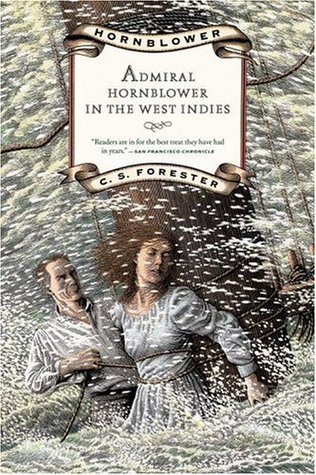
In Robert Harvey’s Bolivar, Robert Harvey’s biography follows Simón Bolívar from his privileged but unsettled childhood in Caracas through the experiences that turned him into a revolutionary. Robert Harvey’s Liberators centres the narrative on Francisco de Miranda, Simón Bolívar, José de San Martín, Bernardo O’Higgins, Thomas Cochrane, Agustín de Iturbide and Pedro I of Brazil. Napoleon’s invasion of the Iberian Peninsula and the collapse of established royal authority created the opening, but independence depended on local armies, shifting coalitions and campaigns conducted across immense distances. In C. S. Forester’s Admiral Hornblower in the West Indies, in the early 1820s Rear-Admiral Hornblower commands Britain’s West Indies station. Across linked episodes he confronts a Bonapartist rescue plot, slavery and the slave trade, piracy, Simón Bolívar’s independence struggle and a destructive hurricane, showing how political unrest continues after the Napoleonic Wars.