Robert Browning was an English poet whose dramatic monologues and psychologically complex verse made him one of the major literary figures of the Victorian period. After an initially difficult reception, works such as Men and Women and The Ring and the Book established his reputation for exploring character, motive, moral ambiguity and the unstable relationship between speakers and truth.
Browning developed the dramatic monologue into a major Victorian poetic form in works including Men and Women and The Ring and the Book. He began corresponding with Elizabeth Barrett in 1845, married her secretly in 1846 and moved with her to Italy. After her death in 1861 he returned to Britain with their son and achieved the broad public recognition that had largely eluded his earlier career.
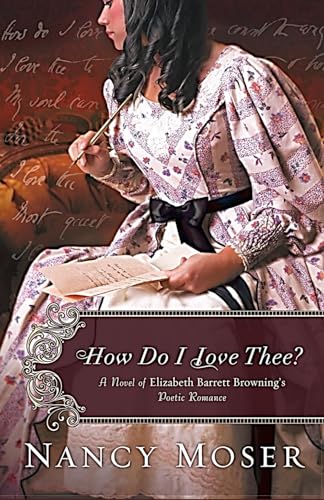
In Virginia Woolf’s Flush, Woolf reconstructs the life of Elizabeth Barrett Browning’s cocker spaniel, following Flush from Wimpole Street into the poet’s courtship with Robert Browning, his abduction in London and the family’s escape to Italy. In Nancy Moser’s How Do I Love Thee?, A letter from the younger poet Robert Browning begins an intense correspondence that develops into clandestine meetings and a love strong enough to challenge illness, family loyalty and fear.