Elizabeth Barrett Browning was an English poet whose work made her one of the most prominent literary figures of the Victorian period. Born Elizabeth Barrett Moulton-Barrett in 1806, she grew up in a wealthy family and read widely in classical and modern literature from an early age. Chronic illness and a controlling father limited her independence, but her poetry circulated successfully before she met the poet Robert Browning in the 1840s.
Elizabeth and Robert Browning married secretly in 1846 and moved to Italy, where they spent most of their married life and had a son. Her collection Sonnets from the Portuguese transformed their courtship into one of the century’s most famous love sequences, while Aurora Leigh addressed women’s education, artistic vocation and social inequality. She also wrote forcefully against slavery and in support of Italian nationalism. Browning died in Florence in 1861.
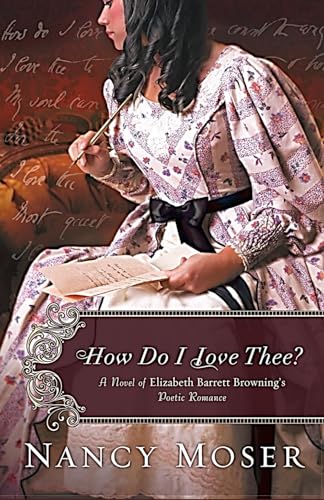
In Virginia Woolf’s Flush, Woolf reconstructs the life of Elizabeth Barrett Browning’s cocker spaniel, following Flush from Wimpole Street into the poet’s courtship with Robert Browning, his abduction in London and the family’s escape to Italy. In Nancy Moser’s How Do I Love Thee?, A letter from the younger poet Robert Browning begins an intense correspondence that develops into clandestine meetings and a love strong enough to challenge illness, family loyalty and fear.