Historical person
Judas Iscariot
died c. 30s
Judas Iscariot is the disciple remembered in the canonical Christian Gospels as the member of Jesus’s inner circle who betrayed him to the authorities in Jerusalem. The texts identify him among the Twelve and associate him with the group’s common funds before describing an agreement to hand Jesus over. At the arrest in Gethsemane, Judas’s identifying gesture becomes a central element of the Passion narrative. Beyond these texts, almost nothing can be established independently about his life or background.
The New Testament preserves different emphases concerning Judas’s motive and death. Matthew links the betrayal to payment, remorse and suicide, while Acts gives a different account of his death and of the field associated with him; later Christian tradition added further explanations. Because the sources are theological narratives rather than modern biographies, attempts to reconstruct Judas as a political zealot, secret collaborator or misunderstood loyal disciple remain speculative. His figure has nevertheless become one of the most repeatedly reinterpreted symbols of betrayal, guilt and responsibility in Western literature.
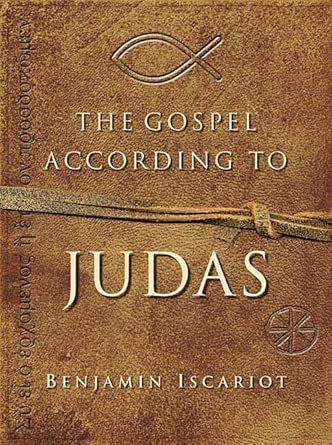
In Margaret George’s Mary, Called Magdalene, She witnesses Jesus’s teaching, the tensions among the disciples, Judas Iscariot’s betrayal, the trial before Pontius Pilate, the crucifixion and the discovery of the empty tomb. In Jeffrey Archer’s The Gospel According to Judas, Presented as an account preserved by Benjamin Iscariot, the imagined son of Judas, this short novel retells the ministry and death of Jesus from a perspective that questions the traditional image of Judas as a calculating traitor. Frank Yerby’s Judas, My Brother places Judas Iscariot within its deliberately demythologised reconstruction of the ministry of Jesus, viewed through the invented ‘thirteenth disciple’ Nathan bar-Yehudah and the political and religious tensions of first-century Judaea.
Standalone books