John Ruskin was born in London in 1819 and became one of Victorian Britain’s most influential critics through works including Modern Painters, The Seven Lamps of Architecture and The Stones of Venice. His writing joined close attention to art and landscape with moral arguments about labour, society, education and the responsibilities of wealth.
In 1877 Ruskin published a hostile criticism of James McNeill Whistler’s Nocturne in Black and Gold, prompting Whistler to sue him for libel. The resulting 1878 trial became a public confrontation between established critical authority and newer ideas of aesthetic autonomy. Ruskin’s reputation remained substantial, although his health and public activity declined in later life.
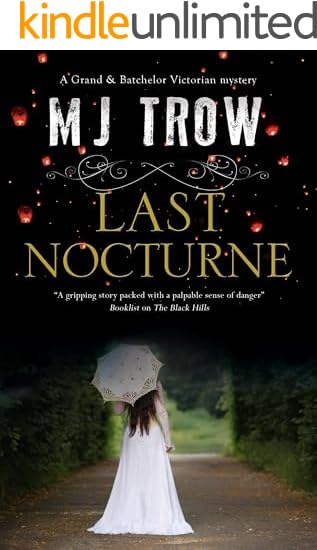
M. J. Trow’s Last Nocturne places Ruskin’s dispute with Whistler alongside a fictional murder investigation undertaken by Grand and Batchelor. The novel uses the genuine artistic controversy as one strand of its portrayal of London in 1878.