

Book
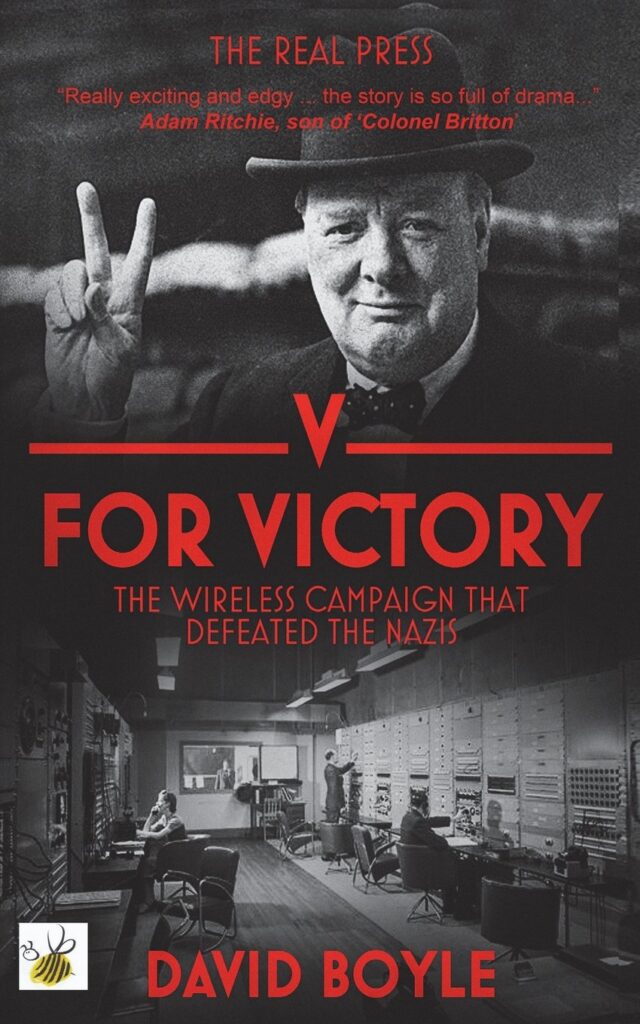
V for Victory
V for Victory recounts the radio campaign that turned a simple letter into one of the most recognisable symbols of resistance in occupied Europe. Belgian broadcaster Victor de Laveleye encouraged listeners to use the letter V for victoire and vrijheid, and the idea was amplified by the BBC’s European broadcasts until the sign appeared in graffiti, coded rhythms and public gestures across territories controlled by Nazi Germany.
Boyle follows the campaign’s adoption by figures including Winston Churchill and Charles de Gaulle and the German attempt to appropriate the symbol in response. The book uses the episode to examine the BBC’s wartime role, the improvisational character of propaganda and the way radio could create a shared language of resistance among audiences separated by borders and occupation.
Genres
Historical people
More by the author
Other books by David Boyle