Books
Phase
Hellfire Club and Medmenham Abbey
1752–1767 CE
Francis Dashwood’s convivial society developed from the Knights or Friars of St Francis and became associated with meetings at West Wycombe and Medmenham Abbey during the middle decades of the eighteenth century. The group combined elite sociability, parody, drinking and calculated irreverence, drawing politicians and other well-connected men into a private world deliberately at odds with conventional public respectability.
Later writers commonly called Dashwood’s circle the Hellfire Club and attributed increasingly sensational sexual, occult and political practices to it. Surviving evidence is limited, and some of the most lurid stories belong to later legend rather than secure documentation. The historical importance of the group lies partly in that ambiguity: an aristocratic private society became a durable symbol of Georgian libertinism, secrecy and the perceived corruption of elite power.
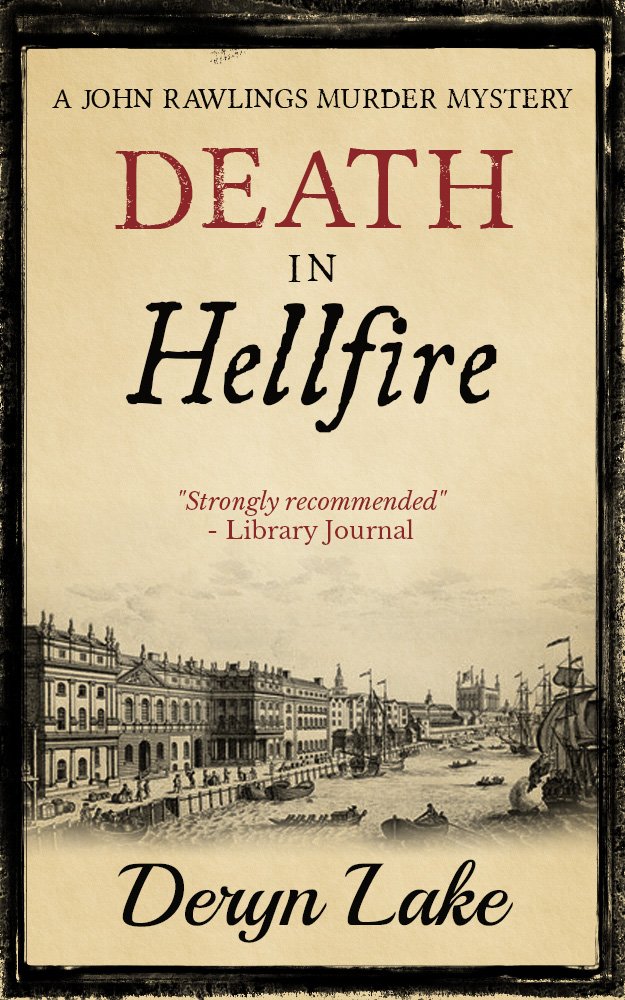
In Deryn Lake’s Death in Hellfire, John Rawlings infiltrates a fictionalised version of Dashwood’s circle at Medmenham and encounters murder among its guests. The setting allows the novel to use the documented reputation of Francis Dashwood and his associates while treating the killings, investigation and much of the clandestine activity as historical fiction.