Non-Fiction
1 Best Non-Fiction Book About Spanish & Portuguese Spice Race
Histories, biographies and reference works are listed separately from the historical novels above.

As an Amazon Associate I earn from qualifying purchases. Affiliate disclosure.
Phase
1511–1571
The Spanish and Portuguese spice race intensified after Portuguese forces reached the Moluccas in 1511. Cloves and nutmeg were among the most valuable commodities in European trade, and direct access to their source promised immense profits. Portugal approached maritime Asia from the Indian Ocean, while Spain sought a westward route that could reach the same islands without conceding Portuguese claims.
The expedition led by Ferdinand Magellan for the Spanish crown departed in 1519, crossed from the Atlantic into the Pacific and reached the Philippines before Magellan was killed at Mactan. Juan Sebastián Elcano then brought the Victoria back to Spain in 1522, completing the first circumnavigation. Further expeditions, rival treaties, fortified trading posts and local alliances kept the contest alive as European powers pushed deeper into Asian and Pacific waters.
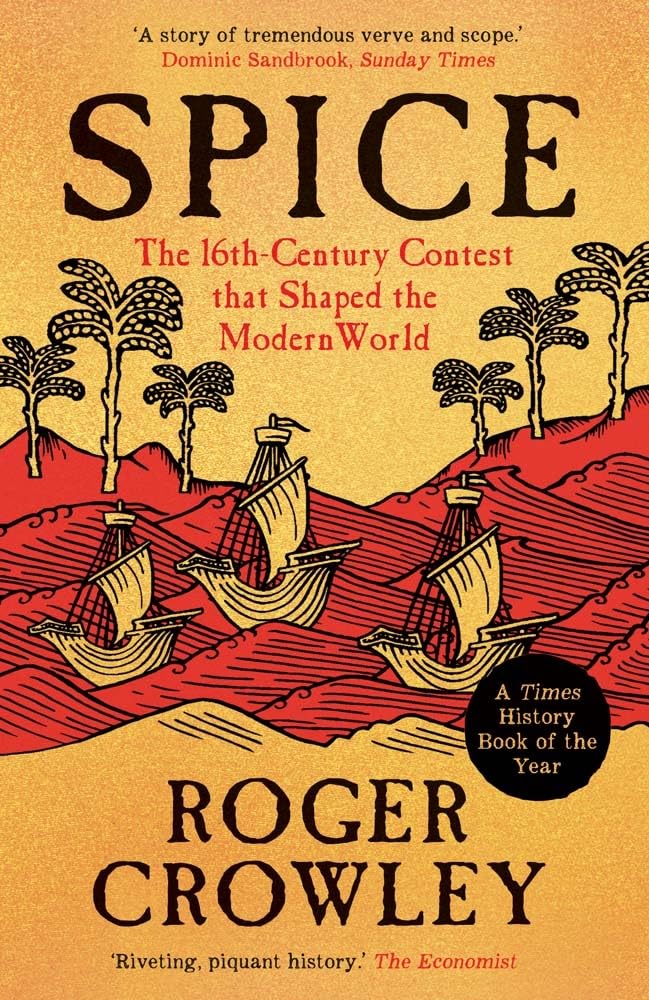
From 1511 to 1571 the search for spices helped link the Atlantic, Indian and Pacific Oceans into increasingly continuous routes of trade and conquest. The process generated navigation and exchange but also warfare, forced labour, enslavement and colonial intervention. Roger Crowley’s Spice uses this competition to show how the pursuit of a small group of commodities helped create the first durable global maritime connections.
Non-Fiction
Histories, biographies and reference works are listed separately from the historical novels above.