Mary Edwards Gerritse was a settler on the north Oregon coast whose life has been preserved through local history and family-based research rather than a large conventional archival record. As a young woman in the late 1880s she married the Dutch immigrant John Gerritse and worked with him to establish a household and homestead in the rugged coastal country around what later became Cannon Beach and Arch Cape. The environment demanded travel across beaches, forest tracks, changing tides and isolated settlements where roads and public services remained limited.
Gerritse became notable for carrying mail along this difficult coastal route on horseback, remembered as an early and possibly the first female carrier on that section of the Oregon coast. Her work made her part of the communications network on which scattered households depended. Local history also records Mary and John Gerritse helping mail carrier George Luce recover a ship’s cannon from the sands near Arch Cape in 1898. Because much of her biography survives through community memory, precise birth and death details should remain cautious unless supported by stronger documentary evidence.
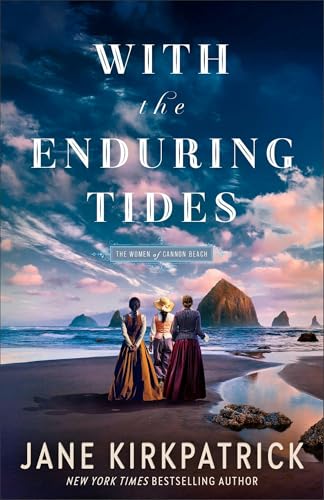
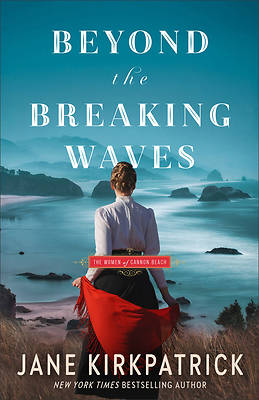
In Jane Kirkpatrick’s Across the Crying Sands, Married at sixteen, Mary Gerritse has a husband and children but remains restless within the life others have defined for her. In Jane Kirkpatrick’s Beyond the Breaking Waves, the concluding Women of Cannon Beach novel returns to Mary Gerritse and the coastal community whose lives have been shaped by work, family obligation and the hazards of the Pacific shore. In Jane Kirkpatrick’s With the Enduring Tides, in the early twentieth century, Mary Gerritse’s family is strained by her daughter Belle’s wish to live with her grandparents, illness in the older generation and the arrival of a caretaker whose past is not what it seems.