
Historical person
John Frost
1912–1993
John Dutton Frost was a British Army officer whose Second World War service became closely associated with the development of airborne warfare. Born in Poona in 1912 and commissioned into the Cameronians in 1932, he served in Palestine and with the Iraq Levies before volunteering for Britain’s new parachute forces. In February 1942 he commanded C Company, 2nd Parachute Battalion, during Operation Biting at Bruneval, where the raiders captured components of a German Würzburg radar and withdrew by sea.
Frost subsequently commanded the 2nd Parachute Battalion in North Africa, Sicily and Italy before leading it during Operation Market Garden in September 1944. His force reached the road bridge at Arnhem and held the northern approaches for several days against much stronger German formations before Frost, wounded, became a prisoner of war. After 1945 he continued his military career, eventually reaching major-general. Arnhem’s road bridge was named the John Frost Bridge in his honour in 1978, and his memoirs helped shape public memory of British airborne operations.
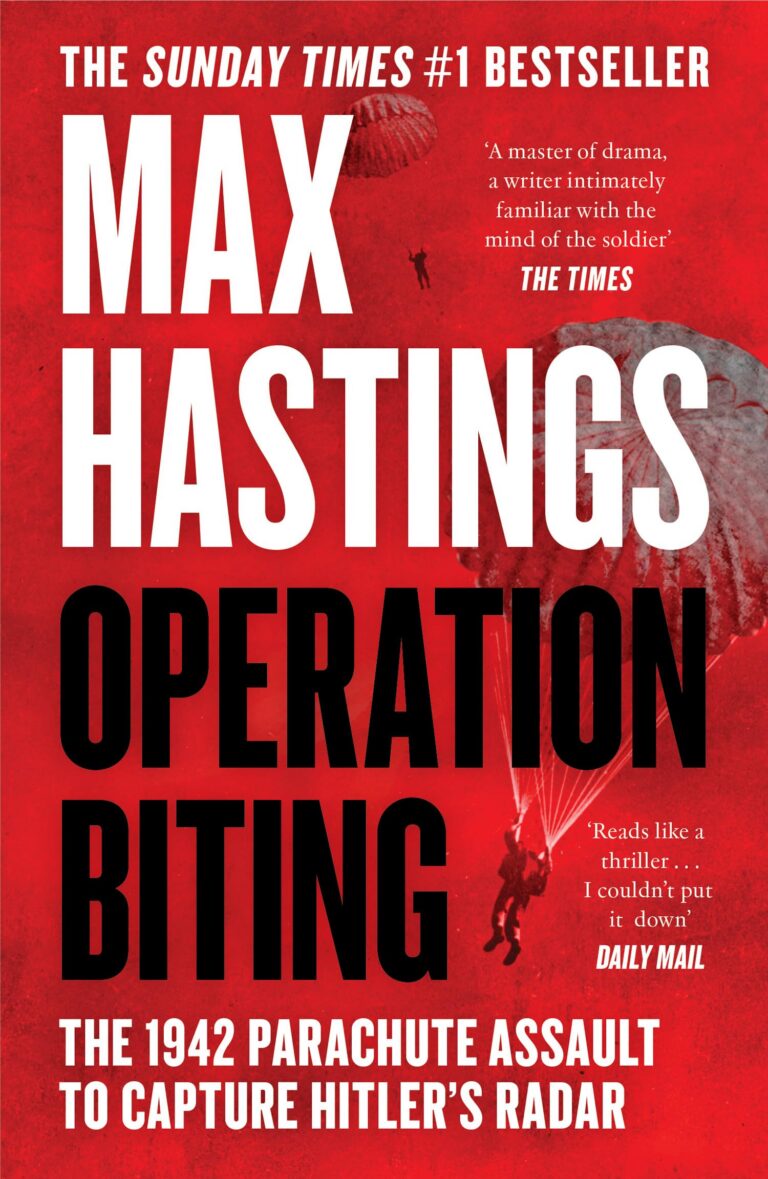
Sir Max Hastings’ Operation Biting places John Frost at the centre of the February 1942 Bruneval raid. Frost led the parachute company dropped near the German Würzburg radar installation while Royal Engineers dismantled key components for evacuation by sea. The operation demonstrated the value of airborne raiding and delivered intelligence that helped British scientists understand German radar, years before Frost became famous for commanding at Arnhem.
Non Fiction
Non Fiction featuring John Frost (1 book)
Biographies, histories and other non-fiction are listed separately from the historical novels above.