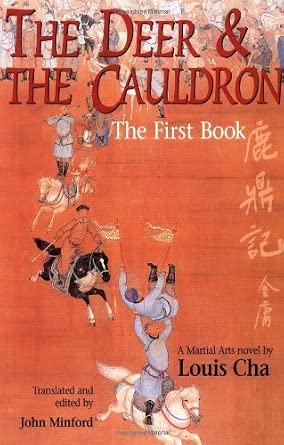
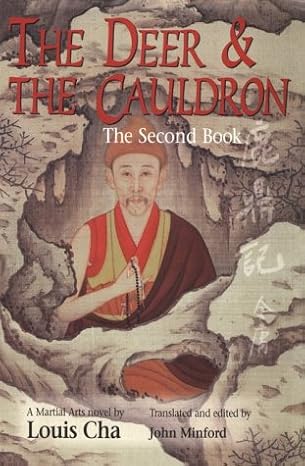
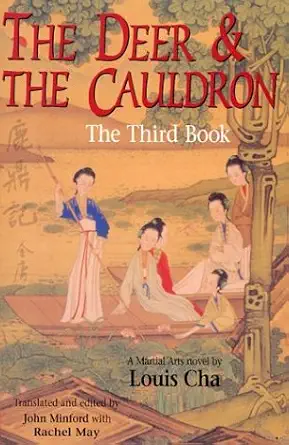
Huang Zongxi was a Chinese scholar, historian and political thinker who remained associated with Ming loyalism after the Qing conquest. His writings criticised autocratic government and helped shape later Chinese political thought. Jin Yong places him among the dissident intellectual world evoked at the beginning of The Deer and the Cauldron.
Huang lived through the collapse of the Ming dynasty and initially supported resistance to Qing rule before turning increasingly to scholarship. His Waiting for the Dawn criticised autocratic government and argued that political institutions should serve the people rather than the private interests of the ruler. He also made major contributions to intellectual history, mathematics and the study of Ming scholarship.
Jin Yong’s The Deer & the Cauldron: Book 1 places Huang Zongxi within the world of Ming loyalism and early Qing political dissent that surrounds Wei Xiaobao’s double life between the Forbidden City and the Heaven and Earth Society. The novel’s use of the Zhuang Tinglong literary inquisition brings the persecution of scholars and historians into the plot, making Huang’s intellectual resistance to Manchu rule part of the historical background against which Trinket learns how dangerous written memory can be.