Historical person
Beatrix Potter
1866–1943
Beatrix Potter grew up in a wealthy Victorian household and developed her gifts through close observation of animals, plants and fungi. After privately printing The Tale of Peter Rabbit , she secured commercial publication and created a series of small illustrated books whose characters and landscapes drew on pets, country visits and exact natural observation. She also managed the licensing and business surrounding her work with unusual independence.
Publishing income allowed Potter to buy Hill Top farm and other Lake District properties. She became an experienced sheep breeder, landowner and advocate for traditional farming. Working with the National Trust, she acquired land threatened by development and left thousands of acres to the organisation at her death. Her legacy therefore combines children’s literature, scientific curiosity, entrepreneurship and landscape conservation.
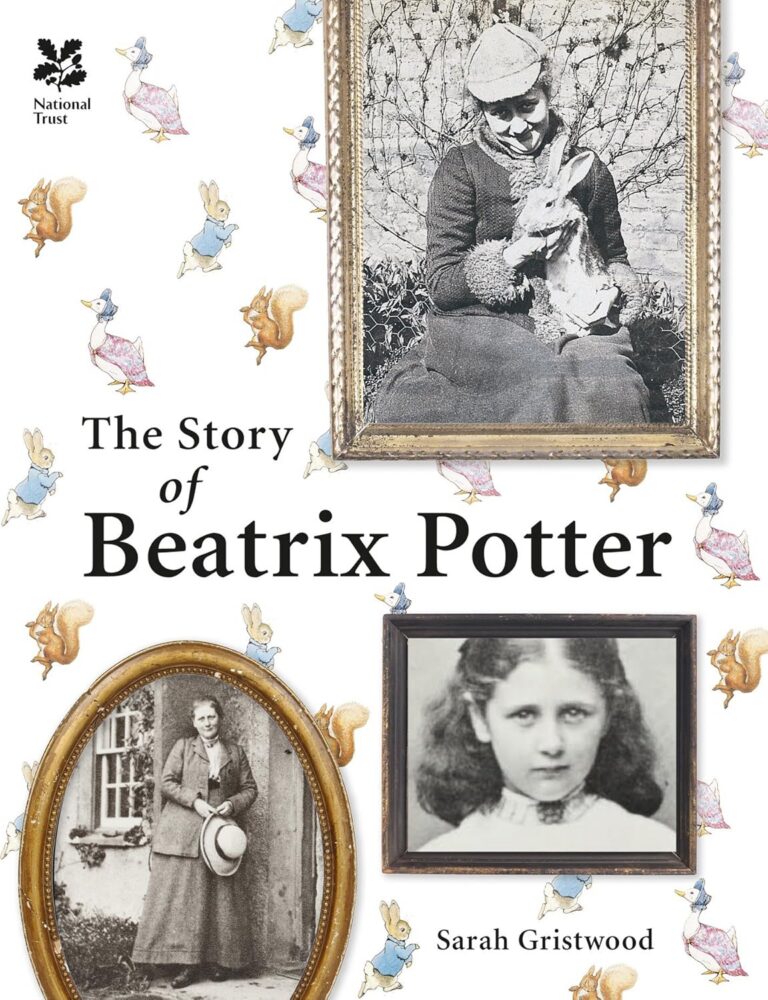
Sarah Gristwood’s The Story of Beatrix Potter treats Potter’s literary career and her later life in the Lake District as parts of the same biography. It traces the observational skill behind characters such as Peter Rabbit and Jemima Puddle-Duck, the business independence created by publishing, and Potter’s transformation into a farmer and landowner. Her purchases and eventual bequest to the National Trust give the book a second legacy to examine alongside the children’s stories: preservation of the landscape that shaped them.
Non Fiction
Non Fiction featuring Beatrix Potter (1 book)
Biographies, histories and other non-fiction are listed separately from the historical novels above.