
Historical person
Lucretius
c. 99–c. 55 BCE
Titus Lucretius Carus was a Roman poet of the first century BCE and the author of De rerum natura, the great surviving Latin exposition of Epicurean philosophy. Almost nothing certain is known about his life beyond what can be inferred from the poem and a few much later notices, and traditional stories about madness or suicide are not considered reliable evidence. He probably wrote during the turbulent final decades of the Roman Republic and addressed his poem to a Roman aristocrat named Memmius.
Across six books, De rerum natura explains a universe composed of atoms moving in void, rejects divine intervention in natural events and argues that the soul is mortal. Lucretius’s ethical purpose is central: knowledge of nature should free human beings from fear of the gods, death and punishment after death. The poem combines technical philosophical argument with extraordinary descriptive and emotional power. Rediscovered and copied widely in the Renaissance, it became an important text in later European debates about materialism, religion, scientific explanation and the relationship between poetry and philosophy.
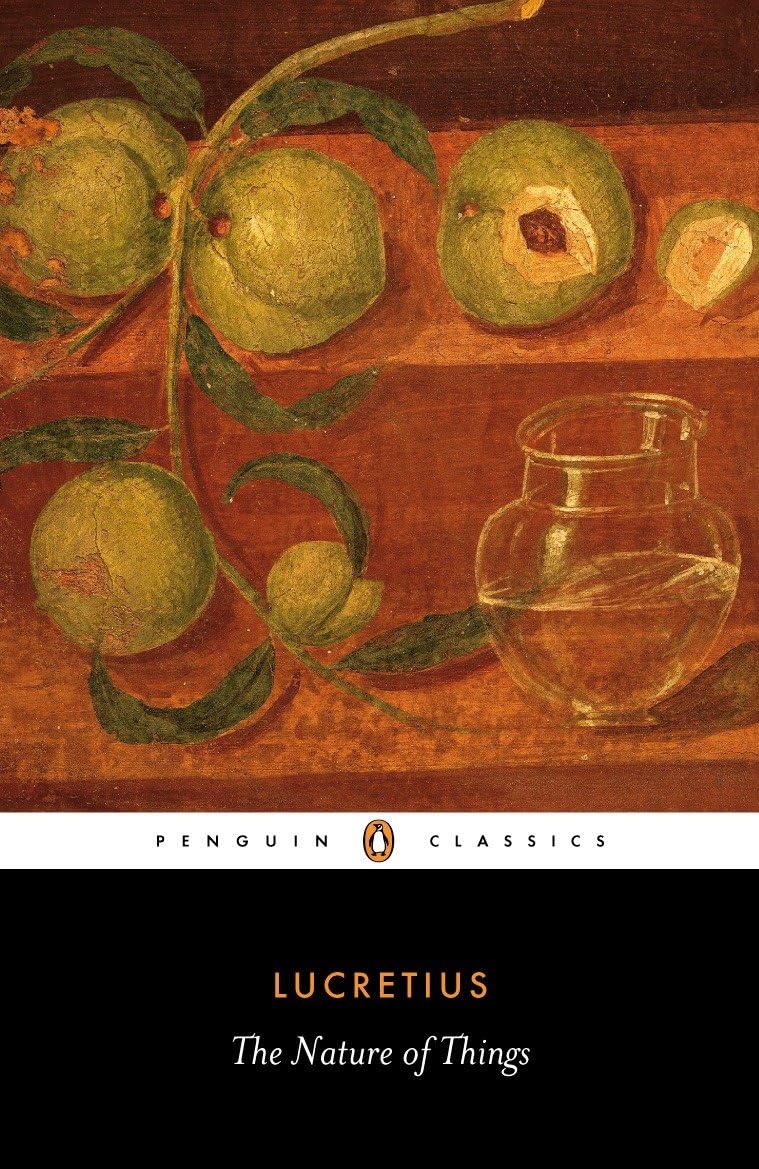
The Nature of Things is Lucretius’s own surviving philosophical poem and the principal source for his reputation. Across six books he turns Epicurean atomism into Latin verse, arguing that natural causes rather than divine intervention explain the world and that understanding nature can free human beings from fear of death and punishment after death. The work therefore presents Lucretius not as a character but through the intellectual project by which he is known.
Non Fiction
Non Fiction featuring Lucretius (1 book)
Biographies, histories and other non-fiction are listed separately from the historical novels above.