Historical person
Alan Turing
1912–1954
Alan Turing was a British mathematician and pioneer of computer science. During the Second World War he worked at Bletchley Park on the cryptanalysis of German communications, and his theoretical work helped define modern computation and artificial intelligence.
After the war Turing worked on early stored-program computers at the National Physical Laboratory and the University of Manchester and continued to explore questions that later became central to artificial intelligence. In 1952 he was prosecuted for homosexual acts and subjected to hormonal treatment. He died in 1954; his treatment and conviction later became emblematic of the persecution of gay men in twentieth-century Britain.
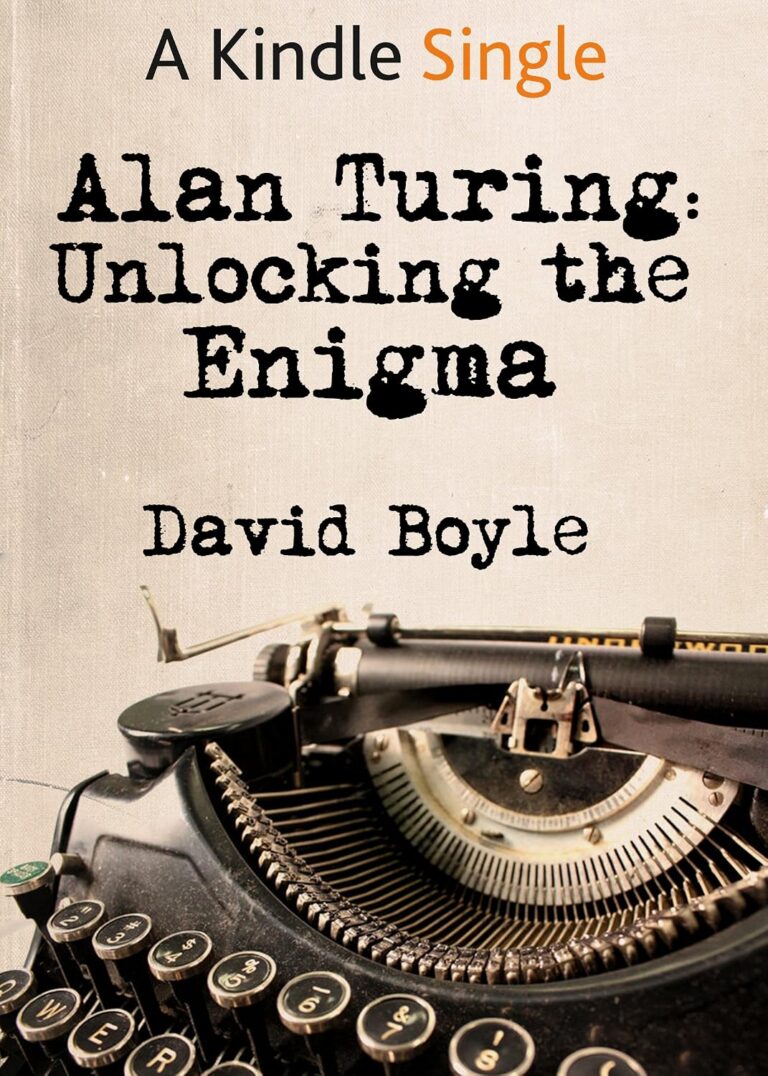
David Boyle’s Alan Turing follows Turing from his mathematical work and theories of computation through Bletchley Park, wartime cryptanalysis and his later thinking about machines and intelligence. Robert Harris’s Enigma uses a fictional Bletchley cryptanalyst rather than Turing as its protagonist, but the codebreaking world Turing helped create supplies the technical and institutional setting for the attempt to recover German naval Enigma traffic. Boyle’s Operation Primrose places that work in the wider naval intelligence war, explaining how the capture of U-110 and its Enigma material fed the struggle between Bletchley Park, the Royal Navy and Dönitz’s U-boats.
Periods
Periods linked to Alan Turing
Standalone books
Standalone books featuring Alan Turing (1 book)
Non Fiction
Non Fiction featuring Alan Turing (2 books)
Biographies, histories and other non-fiction are listed separately from the historical novels above.