Historical person
Timur
1336–1405
Timur, known in the West as Tamerlane, was a Turco-Mongol conqueror who created a vast empire centred on Central Asia in the late fourteenth century. Born near Kesh, south of Samarkand, in 1336, he rose from the fragmented politics of the Chagatai ulus and established effective control over Transoxiana. Although he was not a descendant of Genghis Khan in the male line and therefore did not claim the title khan, he ruled through Chinggisid legitimacy while presenting himself as a divinely favoured military leader.
From his base at Samarkand Timur campaigned across Persia, the Caucasus, the steppe, India, Syria and Anatolia. His armies destroyed cities and carried out mass killings, but they also transferred artisans, scholars and resources to imperial centres, helping create the cultural world later associated with the Timurid dynasty. He defeated the Golden Horde ruler Tokhtamysh and the Ottoman sultan Bayezid I, dramatically altering regional politics. Timur died in 1405 while preparing an invasion of Ming China; his descendants later ruled influential states in Central Asia, Iran and India.
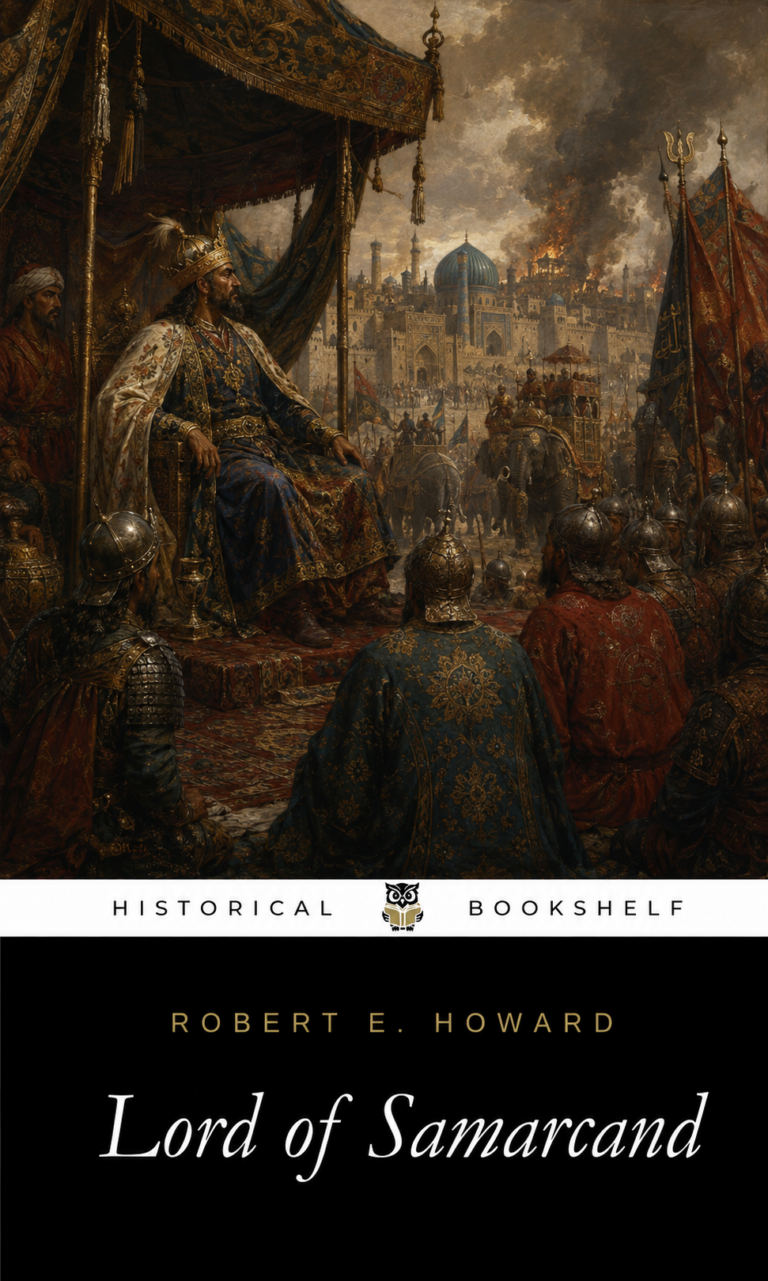
Robert E. Howard’s Lord of Samarcand places Timur close to the action as the conquering ruler whose campaigns made Samarkand the centre of a vast empire. Howard emphasises the splendour and brutality of Timurid warfare—camp politics, sieges, rapid campaigning and personal command—rather than treating Timur as a distant name from chronicle history. His power determines the choices and dangers surrounding the fictional adventurers who move through the story.
Standalone books
Standalone books featuring Timur (1 book)
Non Fiction
Non Fiction featuring Timur (1 book)
Biographies, histories and other non-fiction are listed separately from the historical novels above.