
Historical person
Alum Bheg
d. 1858
Alum Bheg, more accurately transliterated as Alim Beg, is identified by a nineteenth-century handwritten note as a havildar of the 46th Bengal Native Infantry who took part in the 1857 uprising at Sialkot. The surviving documentary record is unusually fragmentary: historian Kim A. Wagner found no independent military file naming him, so the reconstruction of his life depends heavily on the note that accompanied a skull later attributed to him and on records concerning his regiment and the violence at Sialkot.
According to that provenance, Bheg was accused of participating in the killing of Europeans during the rebellion, remained at large after the Sialkot outbreak and was captured the following year. He was executed on 8 July 1858 by being blown from a cannon, one of the spectacular punishments used by British forces during suppression of the revolt. The skull attributed to him eventually reached Britain and resurfaced in Kent, turning Bheg’s story into a modern case study in colonial violence, collecting practices and the ethical treatment of human remains.
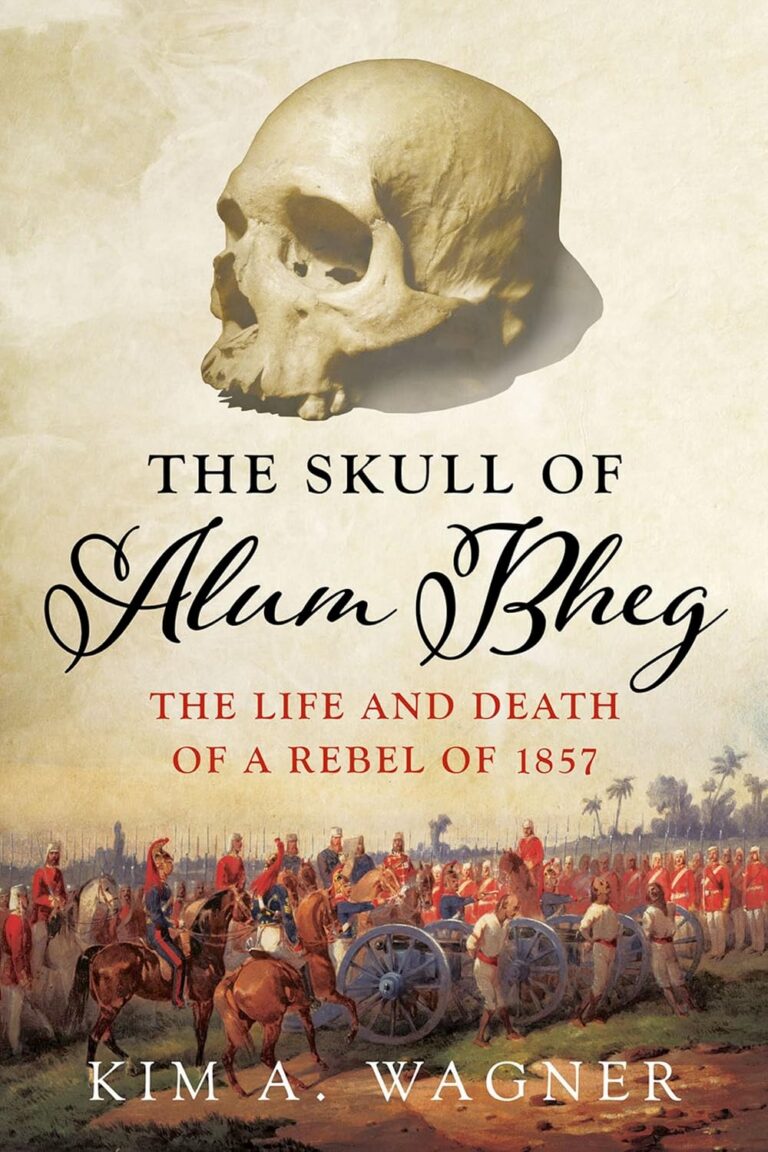
Kim A. Wagner’s The Skull of Alum Bheg begins with the discovery of a human skull in a Kent pub and a handwritten note identifying it as the remains of Alum Bheg, a havildar in the 46th Bengal Native Infantry.
Non Fiction
Non Fiction featuring Alum Bheg (1 book)
Biographies, histories and other non-fiction are listed separately from the historical novels above.