Salome Alexandra was queen regnant of Hasmonean Judaea from 76 to 67 BCE and one of the few women to rule the kingdom in her own right. She had been married to the Hasmonean rulers Aristobulus I and Alexander Jannaeus and succeeded Jannaeus after his death.
Her reign is generally associated with a reversal of some of Jannaeus’s policies and with greater influence for the Pharisees in public life. She appointed her elder son Hyrcanus II as high priest, while tensions with her younger son Aristobulus II foreshadowed the succession struggle that followed her death and weakened the Hasmonean kingdom.
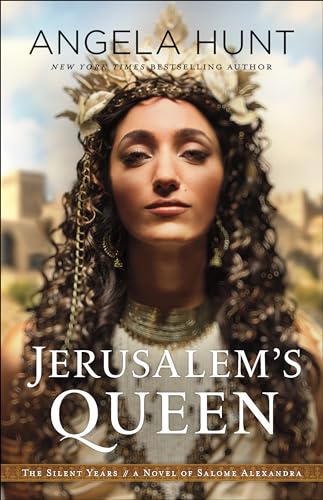
Angela Hunt’s Jerusalem’s Queen gives Salome Alexandra a full imagined path from a girl with little expectation of authority to queen of Judaea in her own right. Her marriages into the Hasmonean dynasty draw her into court rivalry, religious faction and the consequences of Alexander Jannaeus’s violent rule. The novel then follows the reversal of policy associated with her own reign, using Alexandra’s unusual position as a female sovereign to explore how dynastic marriage, Pharisaic influence and succession could reshape the kingdom.