Non-Fiction
2 Best Non-Fiction Books About Lead Books of Sacromonte
Histories, biographies and reference works are listed separately from the historical novels above.

As an Amazon Associate I earn from qualifying purchases. Affiliate disclosure.
Phase
1588–1682
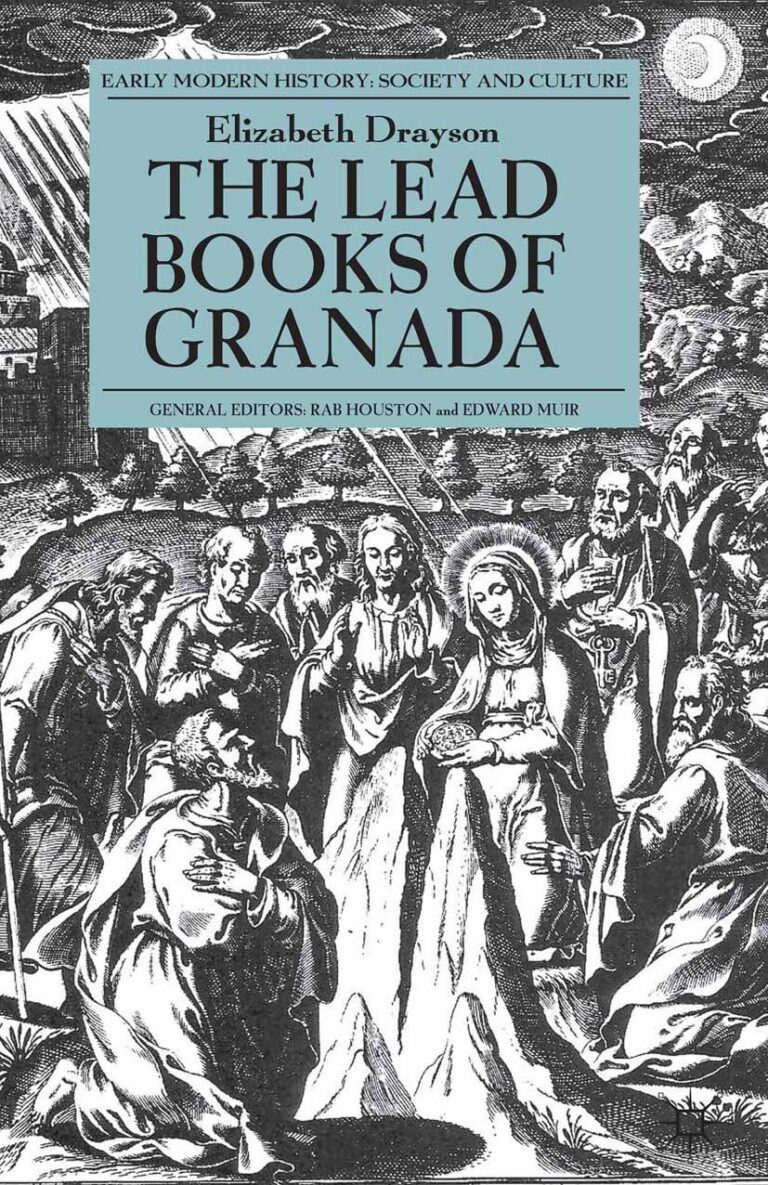
The episode began in 1588 with a parchment and relics found during demolition of Granada’s Torre Turpiana. From 1595, inscribed lead discs and supposed martyr remains appeared in caves on Valparaíso hill, later Sacromonte. The texts claimed to preserve an Arabic-language Christian revelation connected with Saint Caecilius and the earliest church of Granada.
Morisco translators including Alonso del Castillo and Miguel de Luna interpreted the finds, and modern scholarship commonly treats them as likely creators or collaborators. Archbishop Pedro de Castro promoted the relics, founded the Sacromonte institution and defended the texts, whose mixture of Christian and Islamic language offered a possible sacred place for Arabic culture in an increasingly coercive Spain.
After prolonged Roman examination, Pope Innocent XI condemned the writings in 1682. The Lead Books of Granada reconstructs the discoveries, translations and controversy while interpreting forgery as a form of cultural negotiation and resistance rather than merely an antiquarian deception.
Non-Fiction
Histories, biographies and reference works are listed separately from the historical novels above.