
Historical person
Pontiac
c. 1720–1769
Pontiac, also remembered by the Odawa name Obwandiyag, was an eighteenth-century Odawa war leader whose exact birth date and parentage are uncertain. He emerged in the western Great Lakes world shaped by French–Indigenous alliances and the Seven Years’ War. After Britain replaced France as the dominant European power in the region, new policies over trade, gifts, military occupation and settlement generated widespread Indigenous resentment. In 1763 Pontiac organised an attack on Fort Detroit and then led the prolonged siege when the surprise attempt failed.
The conflict commonly called Pontiac’s War extended far beyond Detroit and involved many autonomous Native nations across the Great Lakes and Ohio Country. Modern historians therefore reject the older picture of Pontiac as commander of a single continent-wide conspiracy, while still recognising his unusual prominence in 1763. The siege ended without Detroit falling, and Pontiac eventually made peace with British officials in 1766. His influence then declined. He was murdered at or near Cahokia on 20 April 1769, apparently in a local Indigenous dispute rather than as part of the earlier war.
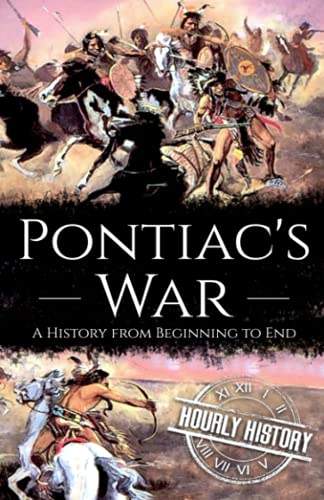
The linked non-fiction Pontiac’s War surveys the broader Indigenous resistance of 1763–65 and uses Pontiac’s siege of Detroit as its most recognisable episode. That framing is appropriate so long as the war is not reduced to the actions of one chief: attacks on other forts and settlements were undertaken by distinct Native communities with their own leaders, grievances and strategies. Pontiac’s role should therefore be presented as prominent but not as centralized command over every participant.
Non Fiction
Non Fiction featuring Pontiac (1 book)
Biographies, histories and other non-fiction are listed separately from the historical novels above.